
Summary
Over 100 different animal species are at Sustainable Safari®. Please note some animals become unavailable due to rotation and scheduling.
Ambassador Animal Species at Sustainable Safari®
Sustainable Safari® has over 100 animal species to view or interact with!
Click the boxes below to learn more about each animal species.
Available at Both Burnsville and Maplewood Locations
Mammals (Both Locations)
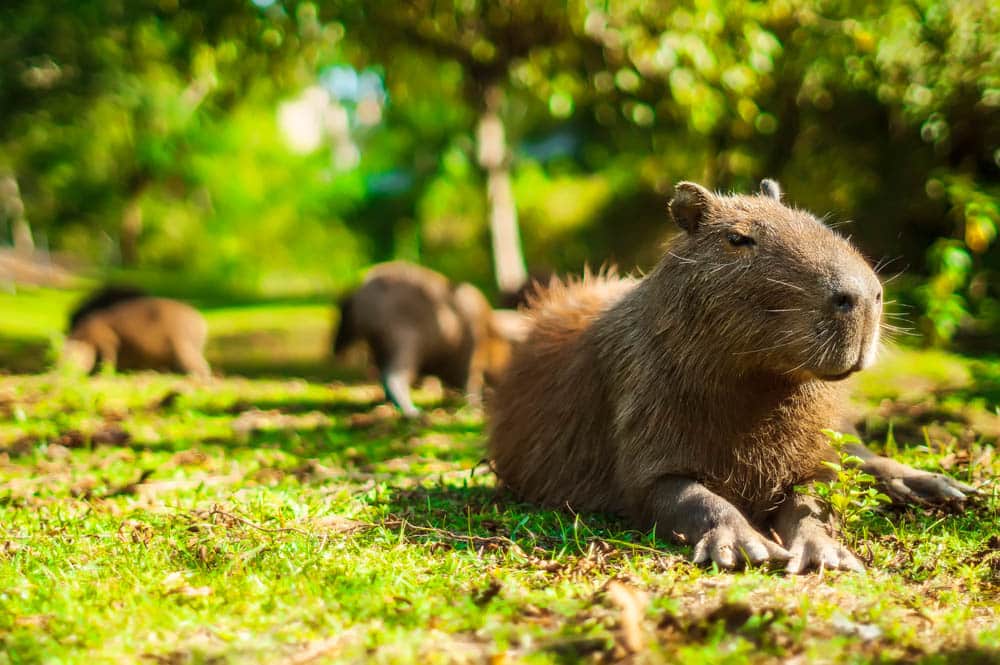
Capybara | Hydrochoerus hydrochaeris (with video)
 Learn
Learn Native Location: South America
Herbivore – plants and grasses
- This animal is semiaquatic and spends most of its day in or around bodies of water. They are excellent swimmers and can hold their breath for up to five minutes.
- Capys have a wide range of calls. They can make high-pitched squeals to indicate excitement or bark like a dog to warn others of danger.
- Capybara is the world’s largest rodent. The smallest rodent is the pygmy jerboa, which is a tiny mouse.
Mountain Coatimundi | Nasuella olivacea (with video)
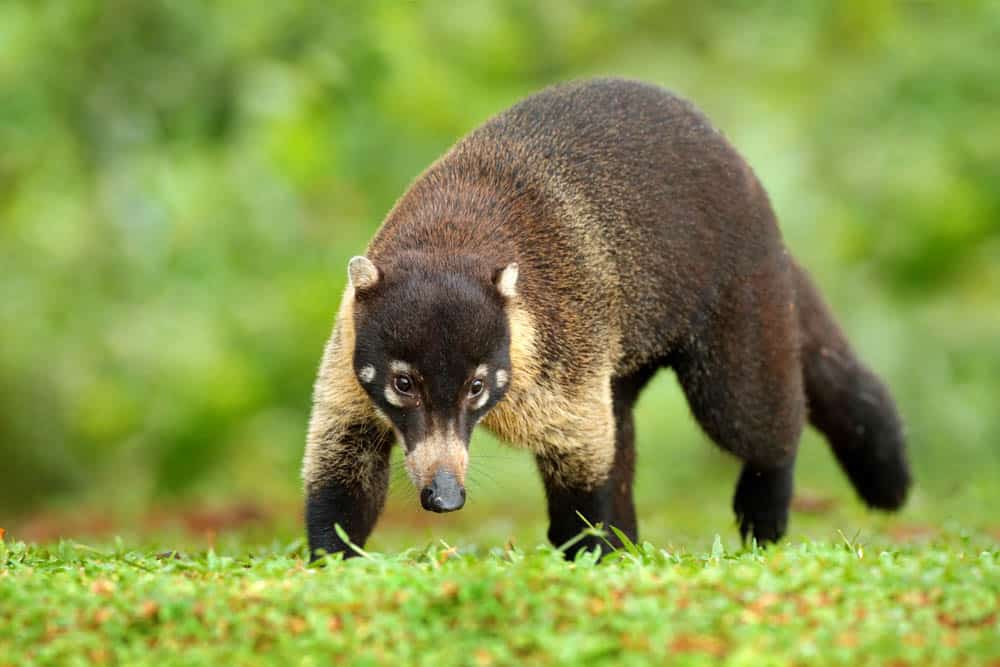
Native Location: South, Central, and North America
Omnivore – small prey, fruits, berries, and insects
- The Coatimundi is a distant relative of the raccoon. They are in the family Procyonidae.
- A group of coatimundis is called a band. Each band contains anywhere from 15 to 20 individuals.
- Coatis are curious and resourceful creatures, often found around highly populated human areas, scrounging for leftover food.
- The Coati is a diurnal animal, most active during the day. During the night, they cuddle up together to sleep in the trees.
Continental giant lop rabbit | Oryctolagus cuniculus

Domesticated – Europe
Herbivore – grass, flowers, and vegetation
- The Continental Giant, also called the German Giant rabbit or the Conti, is thought to descend from the larger Flemish Giant.
- They have powerfully muscled hindquarters and legs that they can use to kick predators away.
- During the 19th century, they were imported to the US from Europe and the UK to help increase the size of rabbits used for meat.
- As kittens, if they feel threatened by a predator, they will emit a high-pitched scream to alert mom or try to scare the predator away.
Cavy (Patagonian mara) | Dolichotis patagonum
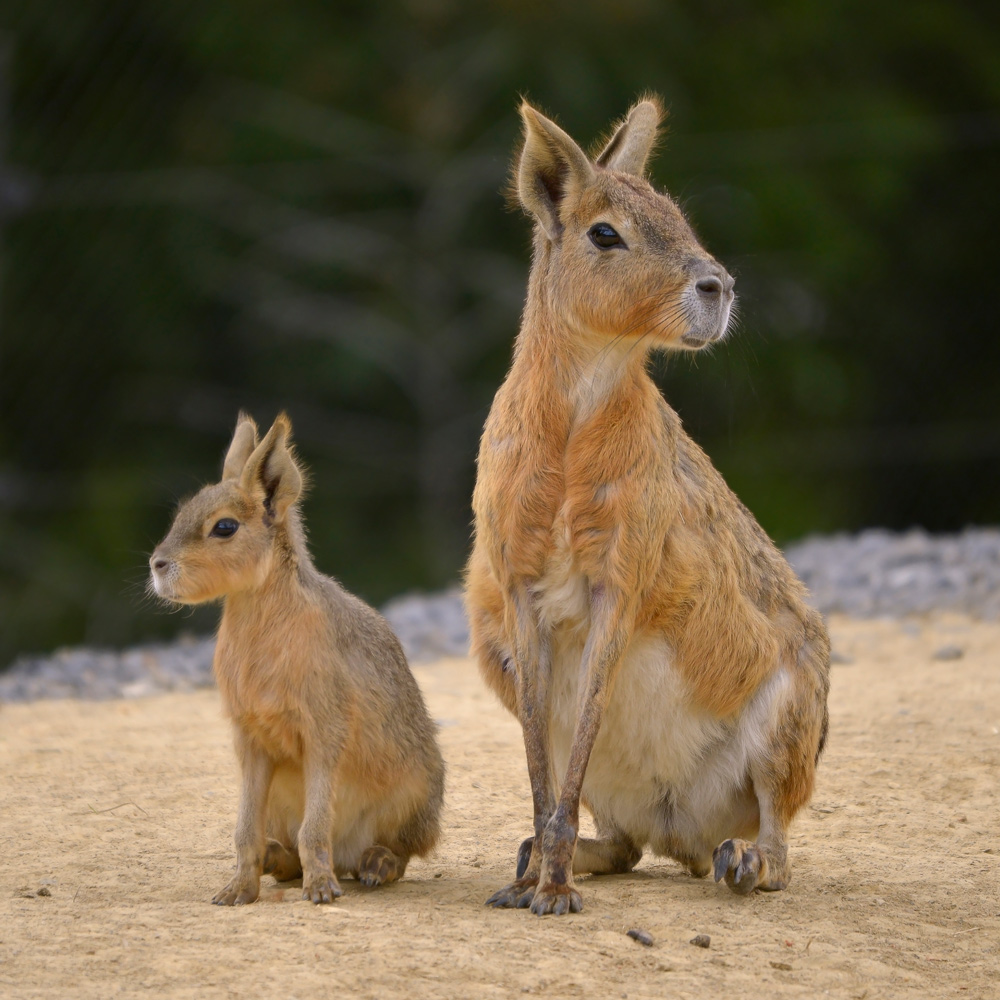
Native Location: Argentina, South America
Herbivore – grass, greenery, shrubs, and seeds
- This animal has exceptionally keen senses and is always on high alert for predators, often fleeing at the slightest sign of danger.
- Patagonian Cavies have one to three pups per litter. They communally care for their young while the males watch for predators.
- Patagonian Cavies are monogamous and mate for life.
- Cavies are in the rodent family.
Fennec Fox | Vulpes zerda
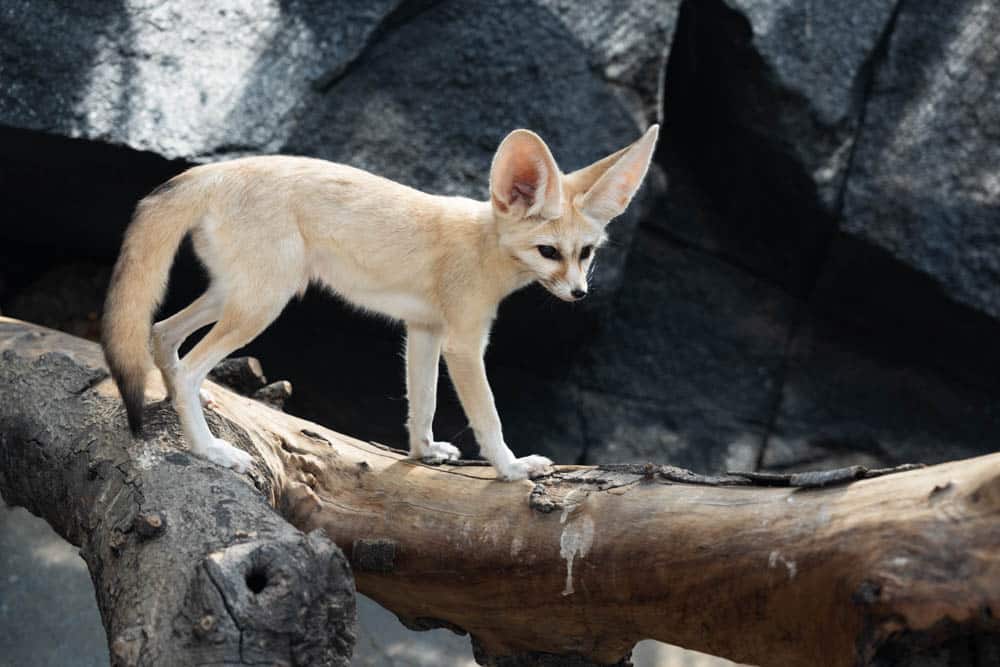
Native Location: Sahara Desert, North Africa
Omnivore – grasshoppers, locusts, worms, fruits, vegetation, and small prey
- The Fennec Foxes have excellent hearing. They use it to locate small prey underground.
- They are desert animals and have adapted well to this environment. Their pale fur allows them to blend into the sand. They are also nocturnal, allowing them to sleep in their cool burrows during the hottest parts of the day.
- Their ears work like built-in AC units, blood vessels catching cool breezes and circulating the coolness through their body.
Goat Pygmy/Fainting | Capra hircus (with video)
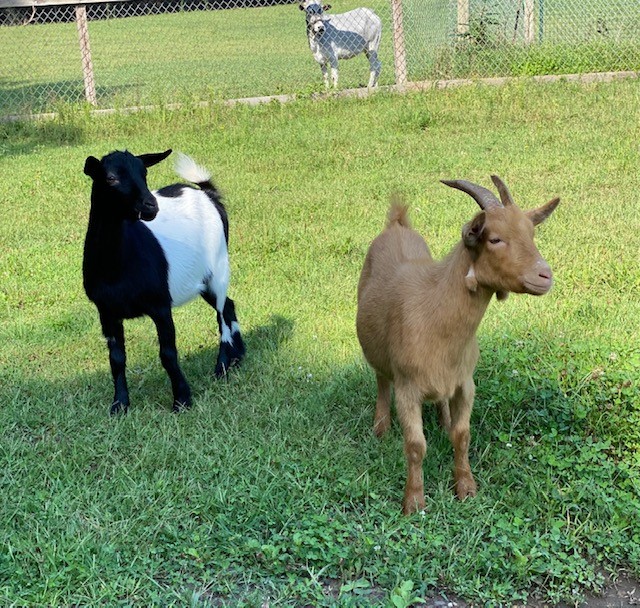
Domesticated
Herbivore – grass, hay, corn, and vegetation.
- They are hardy, can withstand most climates, and are widely kept worldwide as one of the most popular farm animals.
- Their coat is naturally waterproof.
- From a young age, they learn the agility to climb high places to avoid predators or reach greenery.
- Goats have two-toed hooves with a hard, protective shell and padding. These pads can spread apart, applying control and balance to strengthen their grip.
Guinea Pig | Cavia porcellus
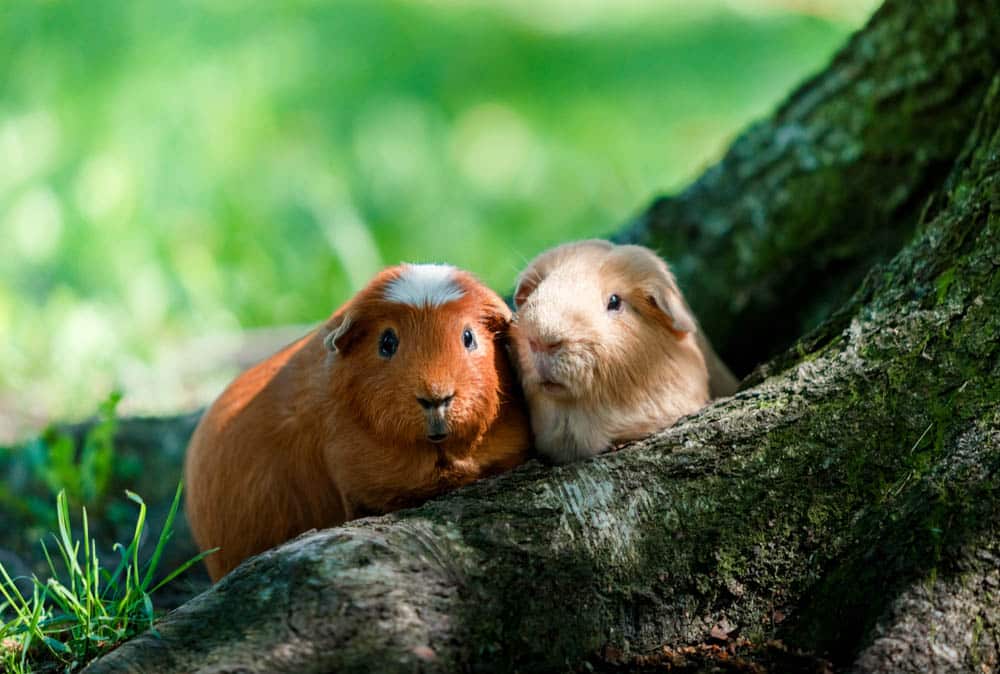
Native Location: Bolivia, Paraguay, Argentina, South America
Herbivore – leaves, twigs, flowers, grasses, and fruit
- Despite being called guinea pigs, they are not in the pig family nor from Papua New Guinea. They are South American rodents.
- Male guinea pigs are called boars, while females are called sows. Babies are called pups.
- They are highly social animals, often found in groups of 10 or more in the wild.
- When excited, they jump up and down while yipping. This is called “popcorning”!
Common Kusimanse | Crossarchus alexandri
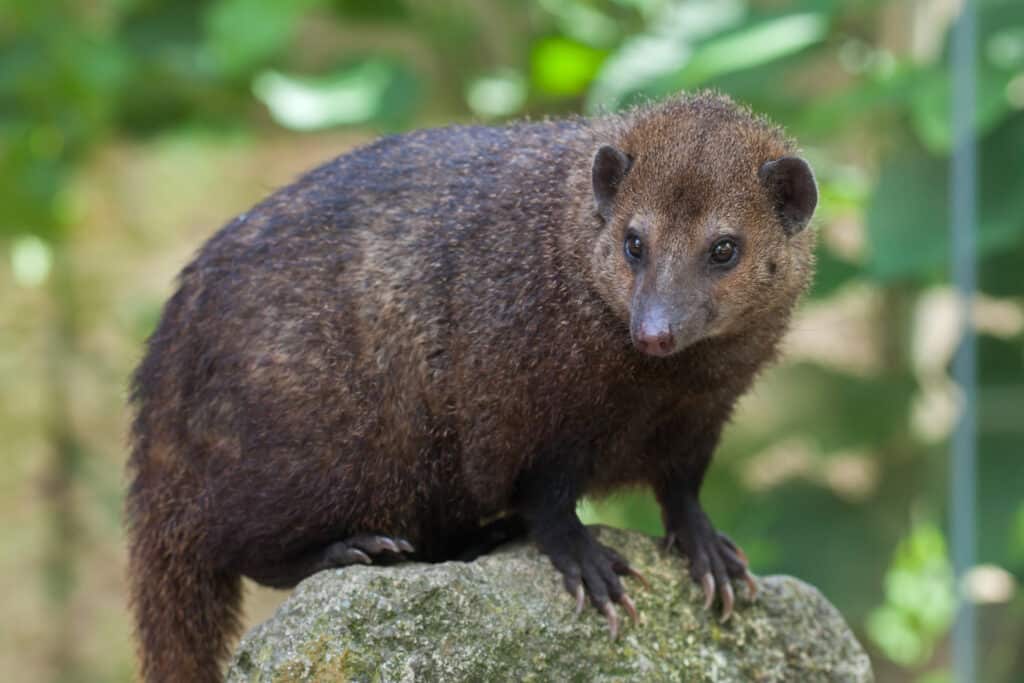
Native Location: West Africa
Omnivore – bugs, larvae, crabs, snails, small rodents, and fruit
- The Common Kusimanse is part of the Mongoose family. The Kusimanse is also known as the “dwarf mongoose.”
- They are highly social animals that live in groups of 10-20 individuals. They are territorial animals. They use scent glands to mark their territory to ward off predators. It will aggressively defend its home against all kinds of intruders.
- They are diurnal animals, playing and preying during the day.
- They are excellent diggers. They will dig out their dens or homes underground.
Palawan Porcupine | Hystrix pumila (with video)
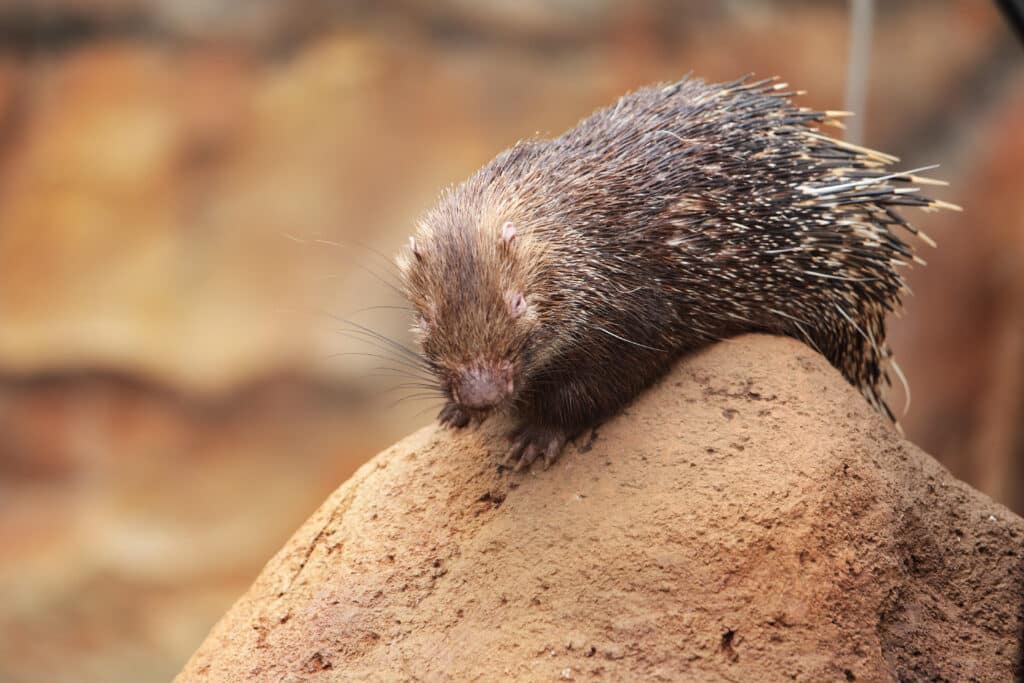
Native Location: Palawan Islands, Philippines
Herbivore – roots, tubers, bark, carrion, insects, vegetation, and fallen fruits
- The Palawan porcupine is considered an “Old World Porcupine,” meaning it only walks on the ground, while “New World Porcupines” also climb trees.
- No porcupines can shoot their quills; that is a myth! Instead, like a peacock, they will fan their quills out to create a sharp barrier between themselves and the predator.
- To stay safe from scavengers, they dig deep burrows and live in their dens.
- Porcupines are a part of the rodent family. They are related to mice and capybara.
Virginia Opossum | Didelphis virginiana (with video)
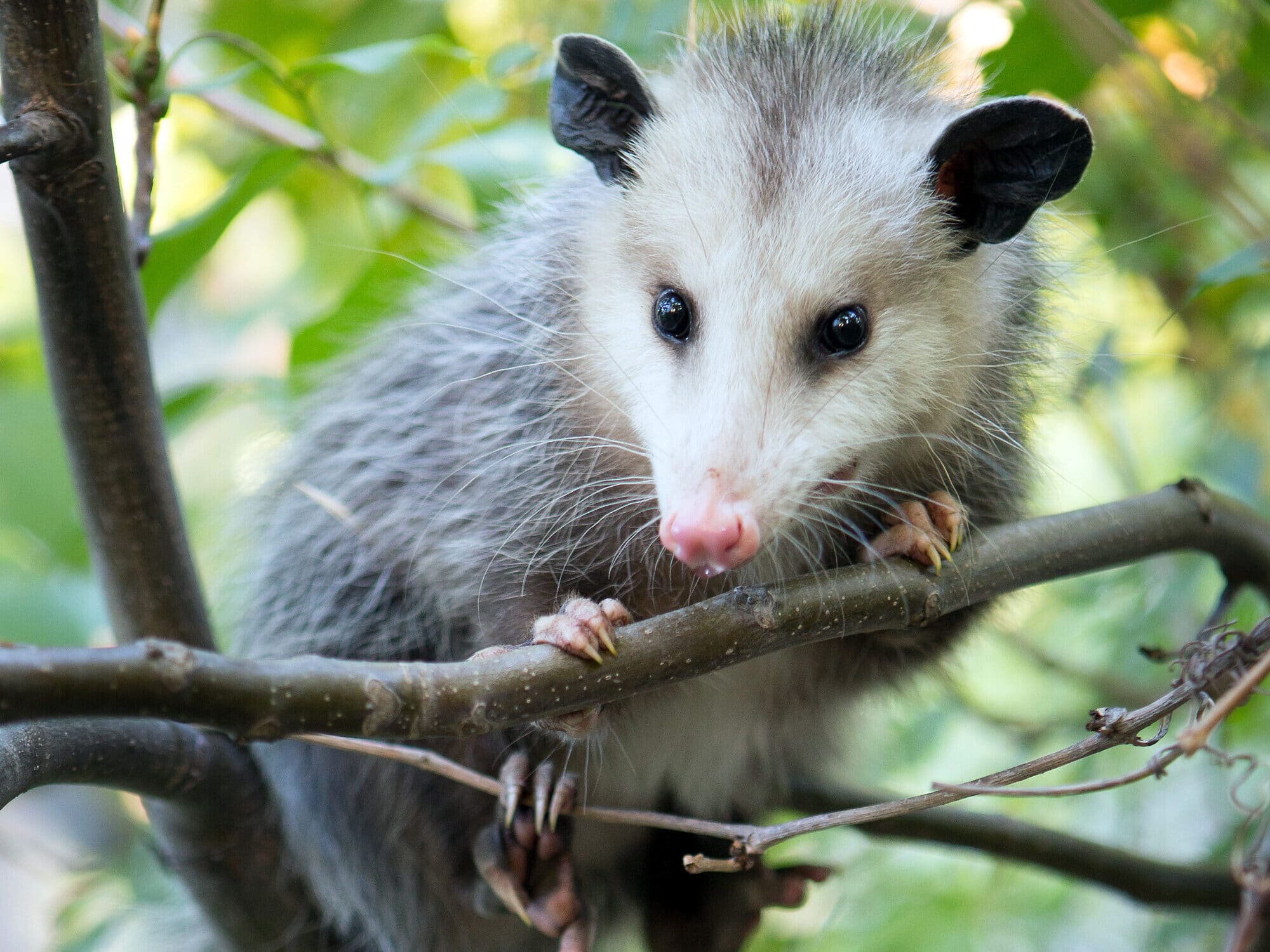
Native Location: North America
Omnivore – small mammals, birds, insects, worms, ticks, vegetation, fruits, and seeds
- The Virginia opossum is North America’s only marsupial. They have 10-14 bumblebee-sized babies that crawl into their pouch after birth.
- They are immune to rattlesnake venom! They can withstand venom of up to 70 bites. They can do this because of peptides in their blood.
- They have more teeth than any North American mammal!
- Opossums are nocturnal. They will sleep during the day and come out at night to feed on any slow-moving prey they can find.
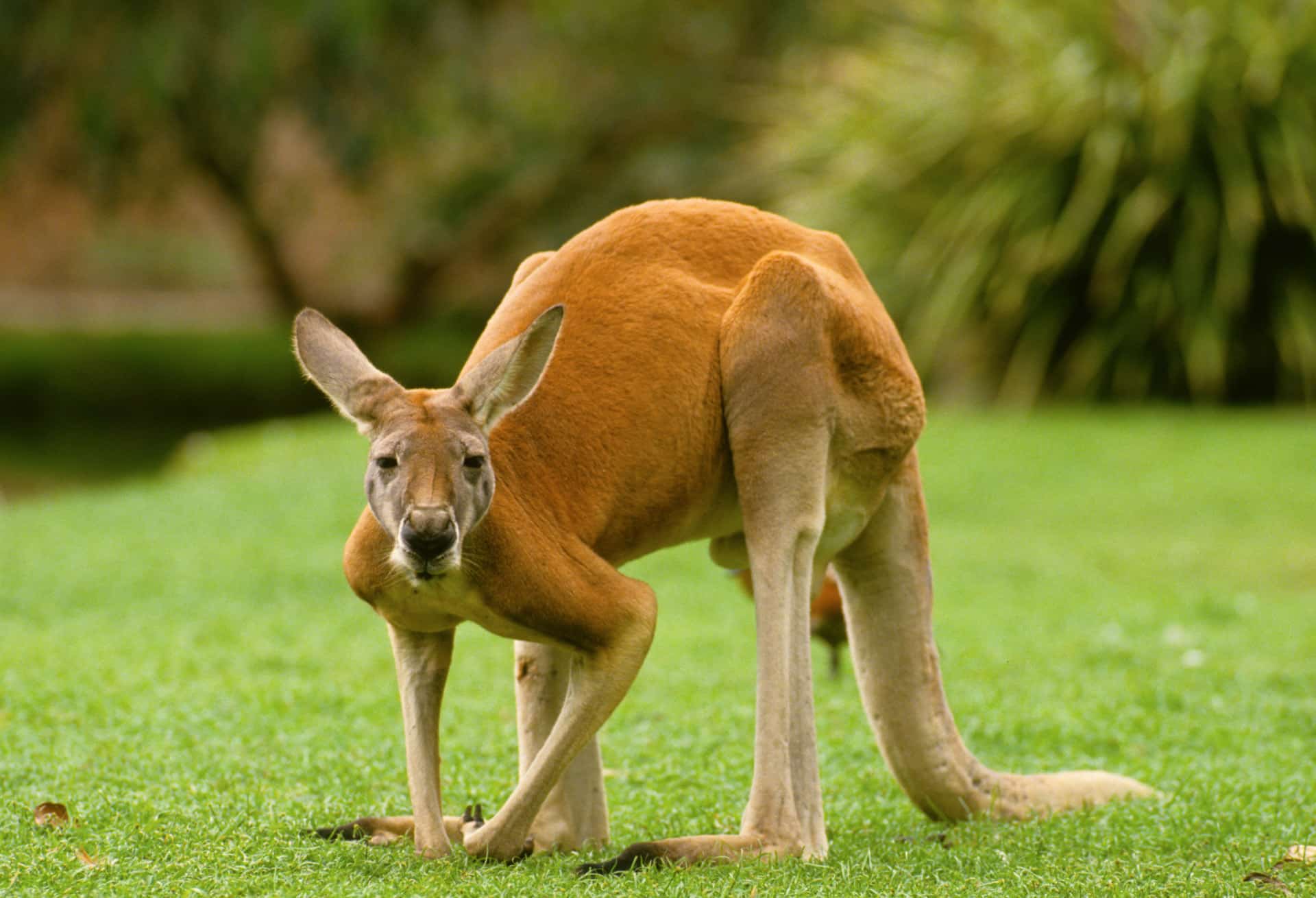
Red Kangaroo | Macropus rufus (with video)
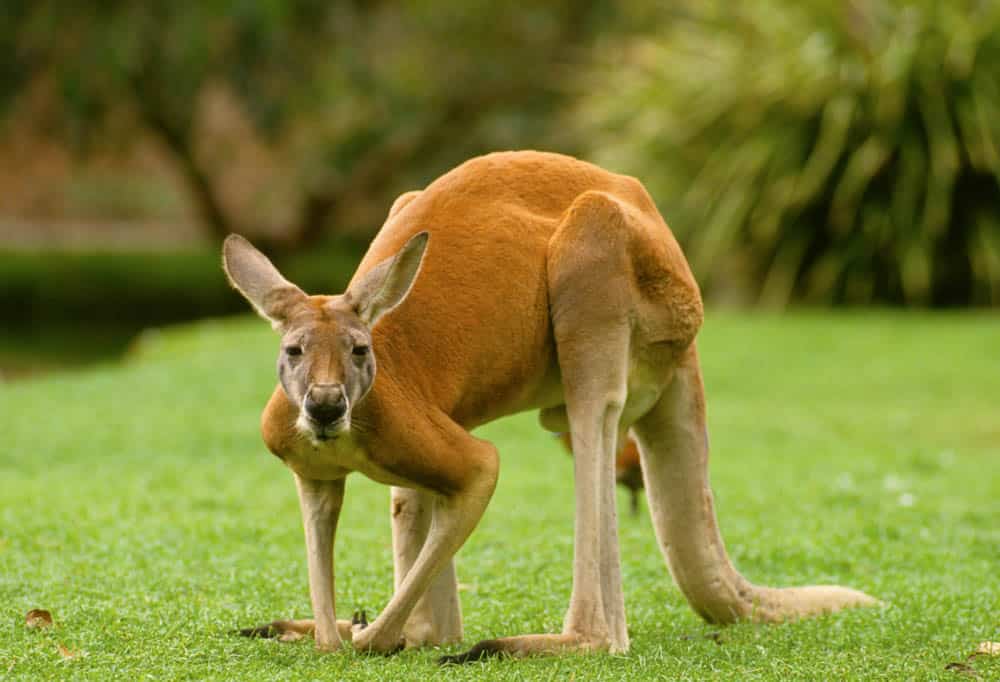
Native Location: Australia
Herbivore – grass, flowers, roots, tubers, and vegetation
- The red kangaroo is a quadrupedal animal that relies on its large, muscular tail to remain upright and walk. Their tails help them keep their balance when jumping up to 25 feet.
- Only the size of a bumblebee when born, the blind kangaroo joey climbs all the way up into momma’s pouch, where it will live and grow for 6-9 months!
- A full-grown male kangaroo can reach up to 7 feet tall!
- A group of kangaroos is known as a mob.
Screaming Hairy Armadillo | Chaetophractus vellerosus
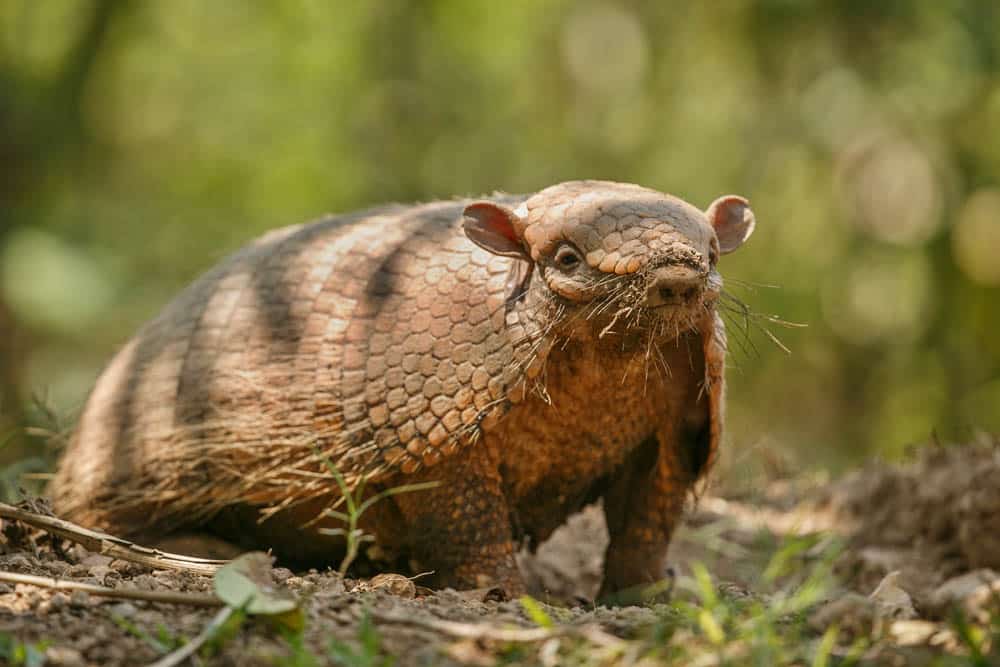
Native Location: South America
Omnivore – bugs, small vertebrates, and plant material
- The Screaming Hairy Armadillo gets its name from its habit of squealing like a pig when threatened and its hairy underbelly.
- The brown armor covering their bodies is called a carapace and is made of keratin, the same material as human hair and fingernails.
- They cannot roll into a ball like the three-banded armadillo. Instead, they protect themselves from predators by hiding in their underground burrows.
- This animal is diurnal during the colder desert seasons and nocturnal during the hotter times.
Ring-tailed Lemur | Lemur catta (with video)
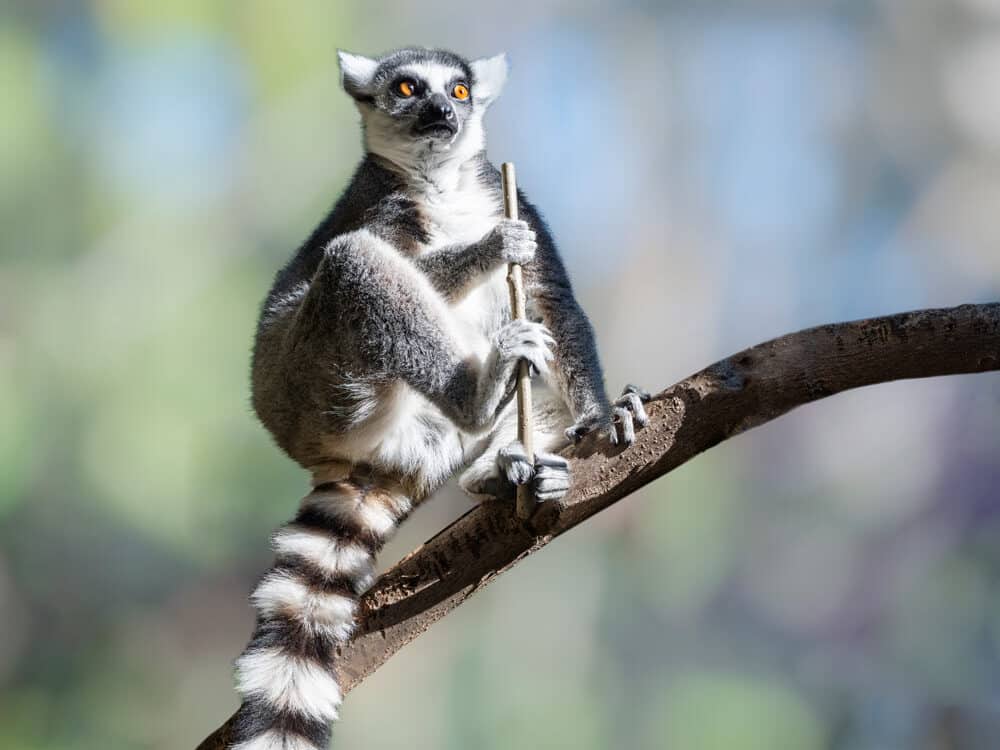
Native Location: Madagascar
Omnivore – fruit, greens, bugs, and small invertebrates
- Lemurs are not monkeys. They are lesser primates.
- While most monkeys, like apes and capuchins, are greater primates.
- Lemurs can produce over 20 distinct vocal calls. Lemurs are social animals that live in groups of three or more.
- Lemurs are from “matriarchies,” meaning their group leader is always female. The highest-ranked male will always be ranked lower than even the lowest-ranked female.
Reptiles and Amphibians (Both Locations)
American alligator | Alligator mississippiensis (with video)
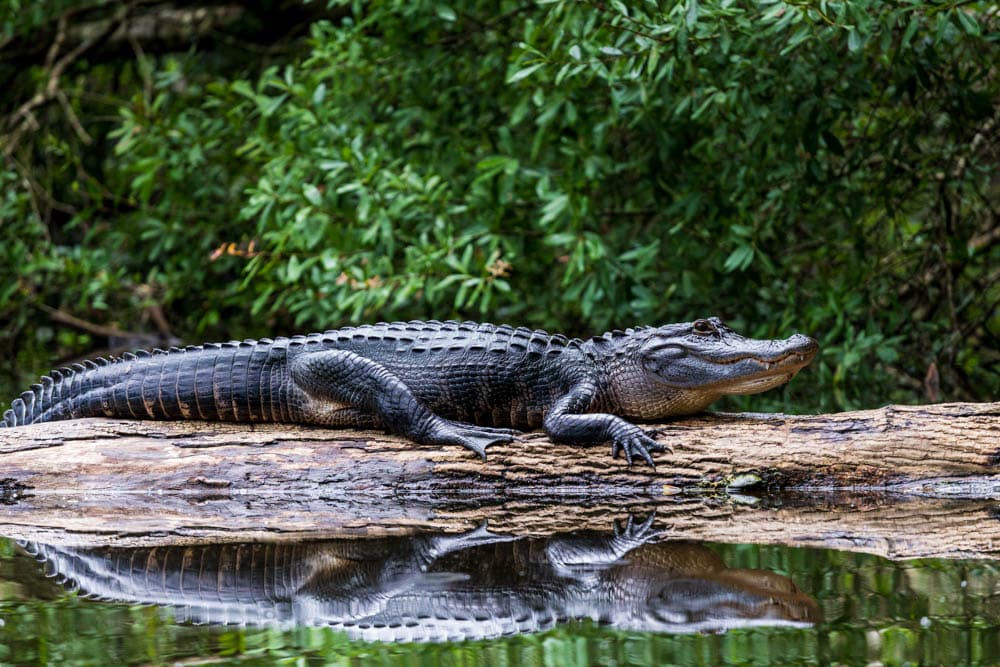
Native Location: Southern Coast, North America
Carnivore – They eat anything that falls in the water, whether fruit from trees or unlucky animals.
- The alligator conserves energy by lazing around for days before it eats. It typically will not actively seek out prey.
- Alligators spend the majority of their days on the floors of river beds. Full-grown alligators can hold their breath for up to eight hours!
- When full-grown, gators have a bite force of 2120+ PSI. They also have the second-largest bite, second only to the crocodile’s.
- Alligators can go through more than 2,000 teeth in their lifetime!
Ball python | Python regius
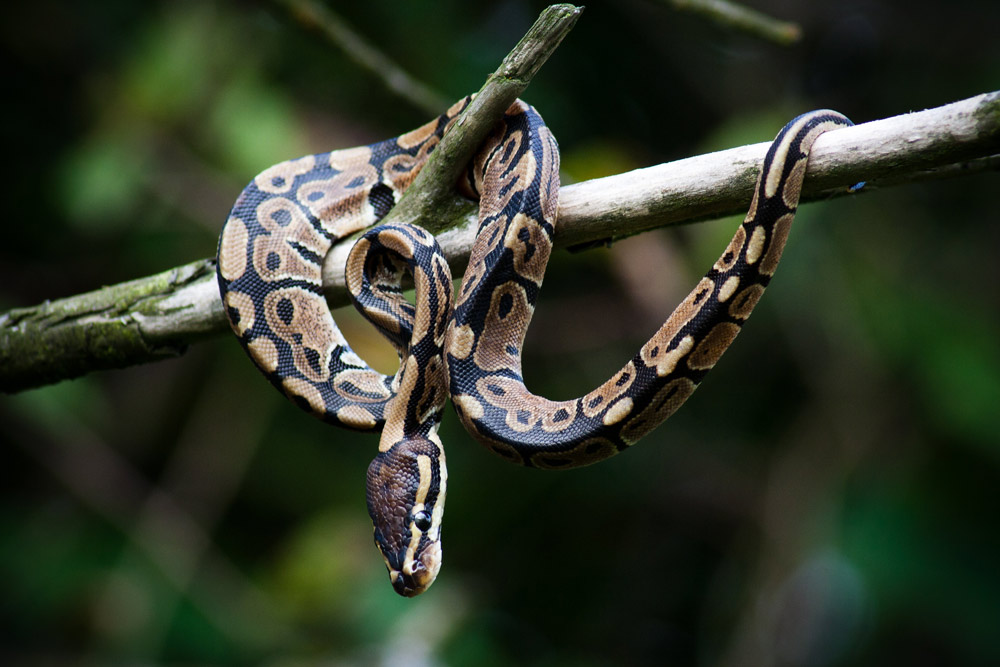
Native Location: West & Central Africa
Carnivore – small mammals, birds, amphibians, and fish
- Ball pythons are non-venomous constrictor snakes.
- These snakes have an average of seven eggs per clutch.
- The mother protects the eggs before hatching. Once the hatchlings emerge, the mother will leave, and they will live solitary lives, meeting only to mate.
Brown Anole | Anolls sagrel

Information coming soon
Pacific horned frog | Ceratophrys stolzmanni
Information coming soon
Pond Slider | Trachemys scripta
Information coming soon
Savannah Monitor | Varanus exanthematicus
Information coming soon
Red-footed tortoise | Chelonoidis carbonarius
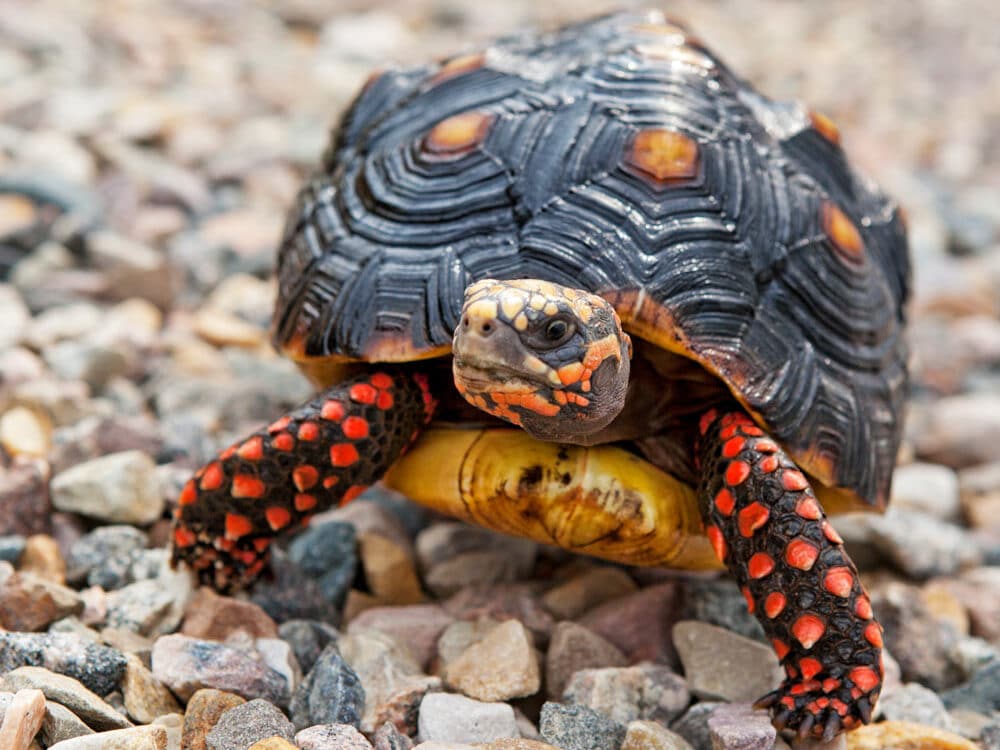
Native Location: South America
Herbivore – leafy greens, grasses, fungi, fruits, and flowers
- Both male and female red-footed tortoises use head movements to identify and alert one another.
- After mating, females can have five to 15 eggs.
- These tortoises spend over half of each day resting while hidden under leaves.
Birds (Both Locations)
Parakeet / Budgerigar | Melopsittacus undulatus (with video)
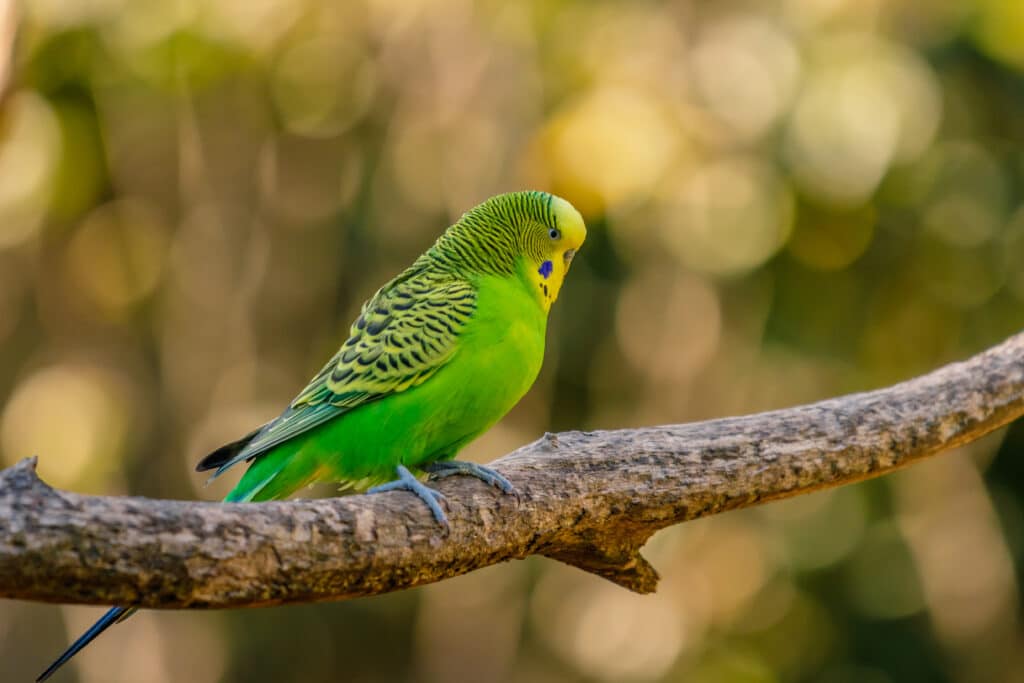
Native Location: Australia
Herbivores – seeds, fruits, and vegetation
- Parakeets are native to Australia and are known as “budgies.”
- They have fast-growing beaks that can grow over three inches a year. They need to chew on branches or toys to wear down their beaks so they don’t overgrow!
- They have acute vision and can even move each eye independently.
- Female parakeets have pink or brow ceres, while males have blue/purple cere. The cere is the tiny bit of skin around their nostrils.
Available at Burnsville Center, Sustainable Safari
Mammals (Only At Burnsville)
Asian Small-clawed Otter | Aonyx cinereus
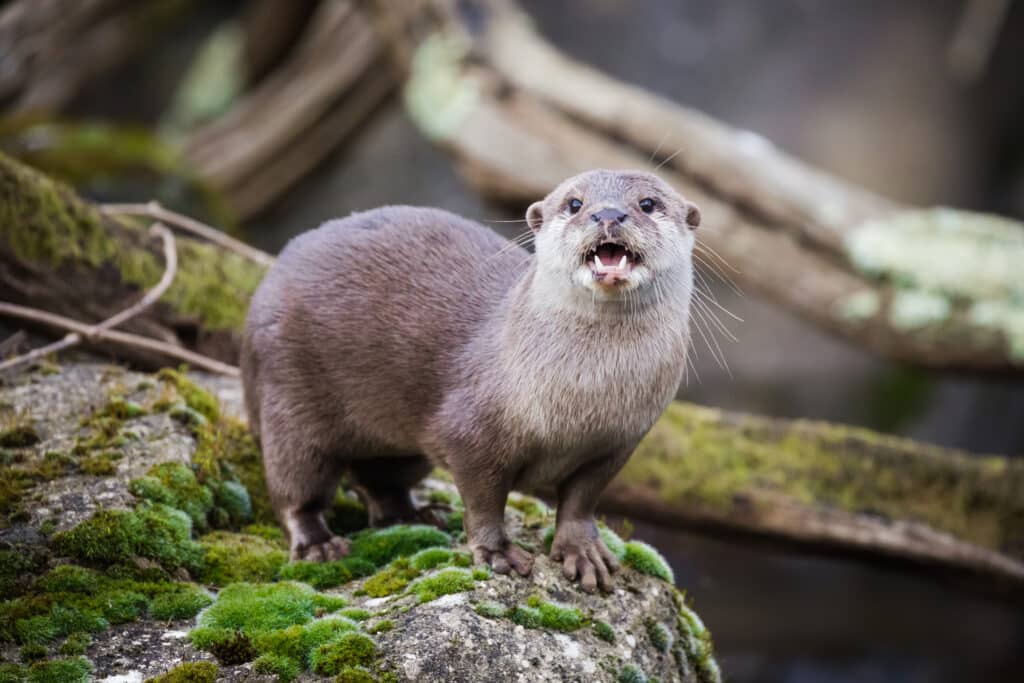
Native Location: Asia
Carnivore – fish, frogs, crustaceans, insects, and snakes
- The Small-clawed Otter is built for swimming. Their bodies are well adapted to it as well. They have a powerful tail that helps them change direction in the water. They can also close off their ears and nostrils to keep water out.
- Otters are highly social animals. They do well in groups of 3 or more, using several calls and yips for communication.
- They are monogamous, mating with the same partner their entire lives.
- Their fur is so dense that they have over 450,000 hairs per square inch!
Three-banded Armadillo | Chaetophractus vellerosus
Information coming soon
Palawan Binturong / Bearcat | Arctictis binturong whitei (with video)

Native Location: Palawan Islands, Philippines
Omnivore – fruits, small animals, eggs, and bugs
- This animal is incredibly agile and can easily hop through thick forest trees.
- The binturong is the largest animal in the world with a prehensile tail, which they use to hang upside down or to securely grasp trees.
- Do you smell buttered popcorn? That’s the natural musk of the binturong!
- Binturongs, nicknamed bearcats for obvious reasons, are classified in the small family of carnivorous mammals called Viverridae.
Grant’s gazelle | Nanger granti
Information coming soon
Thomson’s gazelle | Eudorcas thomsonii
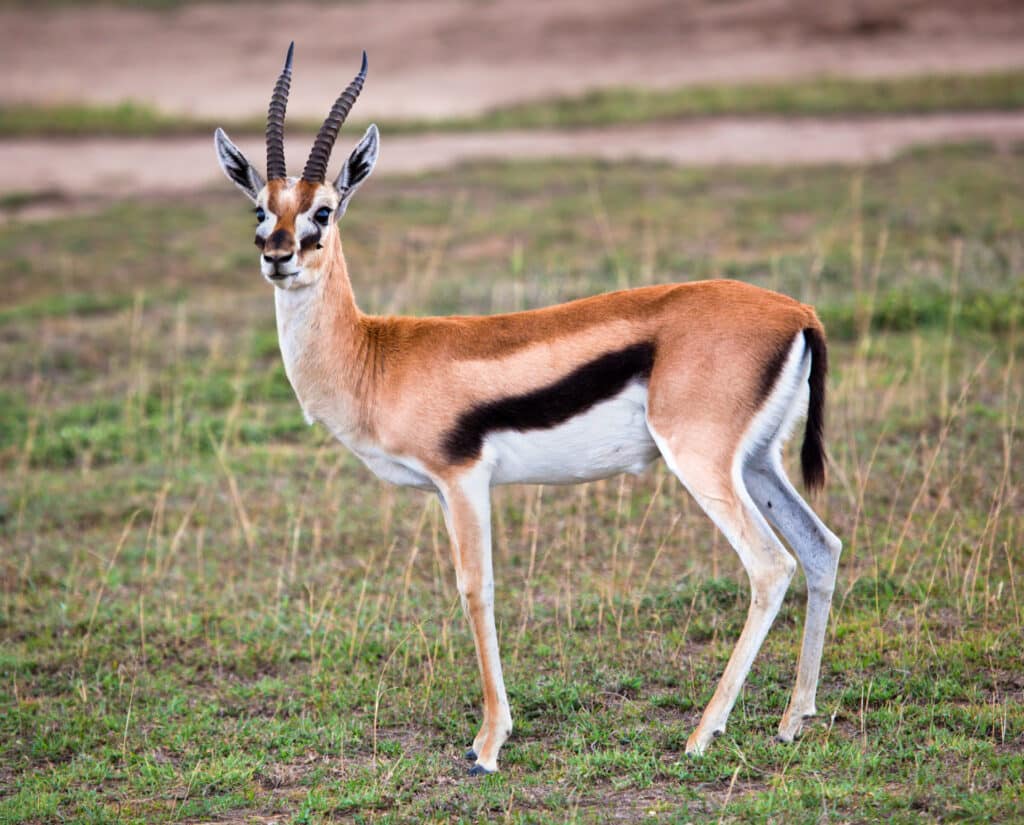
Native Location: Africa
Herbivore – grasses, shrubs, and seeds
- This animal has exceptionally keen senses and is always on high alert for predators, often fleeing at the slightest sign of danger.
- They travel in small herds that help protect individuals from predators. Predators of the Thomson Gazelle include wild dogs, leopards, cheetahs, hyenas, jackals, and lions.
- Thomson Gazelles are found in the grasslands and deserts of eastern Africa.
Alpine Goat | Capra hircus
Information coming soon
Toggenburg Goat | Capra hircus
Information coming soon
Common Marmoset | Callithrix jacchus (with video)
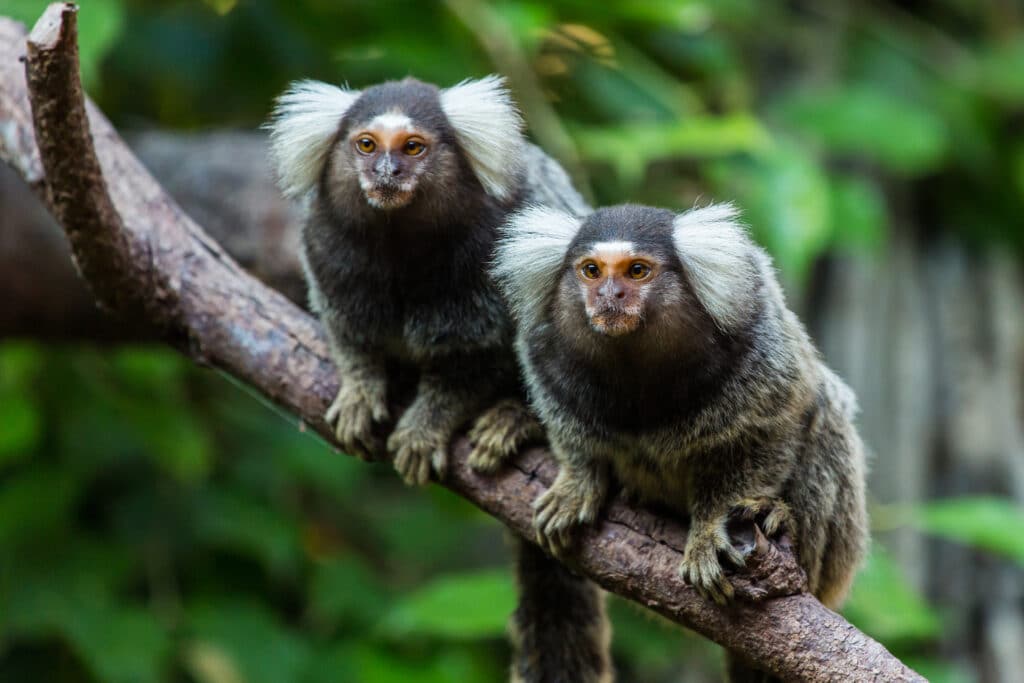
Native Location: Brazil, South America
Omnivore/Frugivores – primarily fruits or sap and bugs
- The common marmoset is a highly social animal that forms family units of 2-15 individuals.
- They are highly territorial animals, marking their homes with scents from their scrotal glands on all their home trees.
- They cling to their mother’s back for the first few weeks of life.
- The common marmoset is diurnal. This means that they are most active during the day. During the night, they cuddle one another.
Nyala | Tragelaphus angasii
Information coming soon
African Crested Porcupine | (with video)
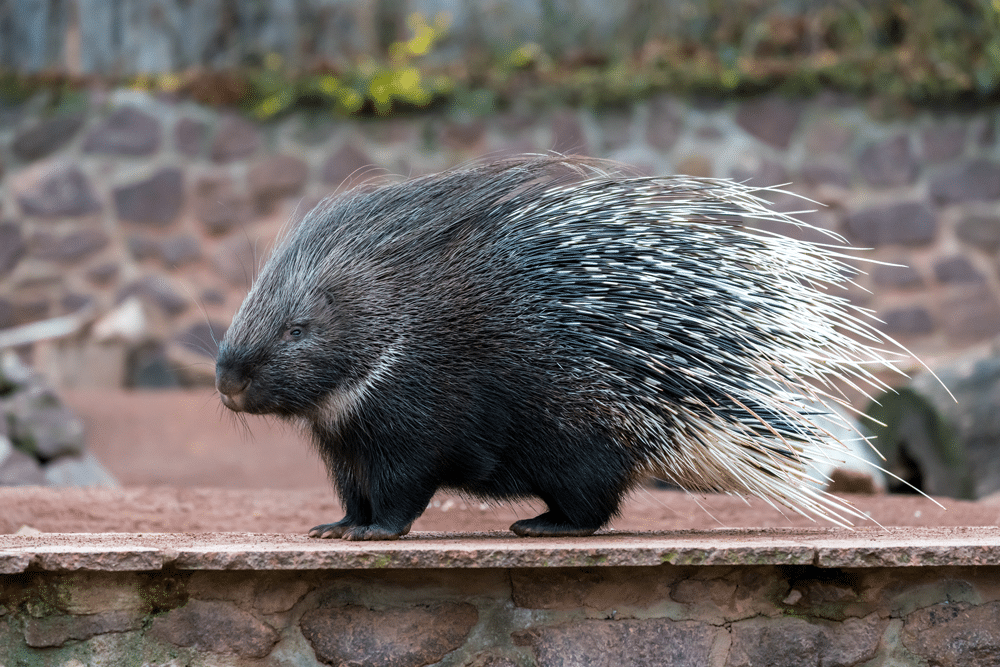
Native Location: Africa
Herbivore – bark, roots, fallen fruits, and cultivated crops
- The African Crested Porcupine is the largest species of porcupine in the world. They are the second-largest rodent in the world, after the capybara.
- The African porcupine is nocturnal and does most of its foraging at night.
- It is a myth that porcupines can launch their quills. When confronted with predators, this porcupine raises its 18–22-inch quills into a sharp barrier between itself and predators.
- When threatened, porcupines stomp their feet to rattle their hollow tail quills to scare away predators.
Braizlian Prehensile-tailed Porcupine | Coendou prehensilis
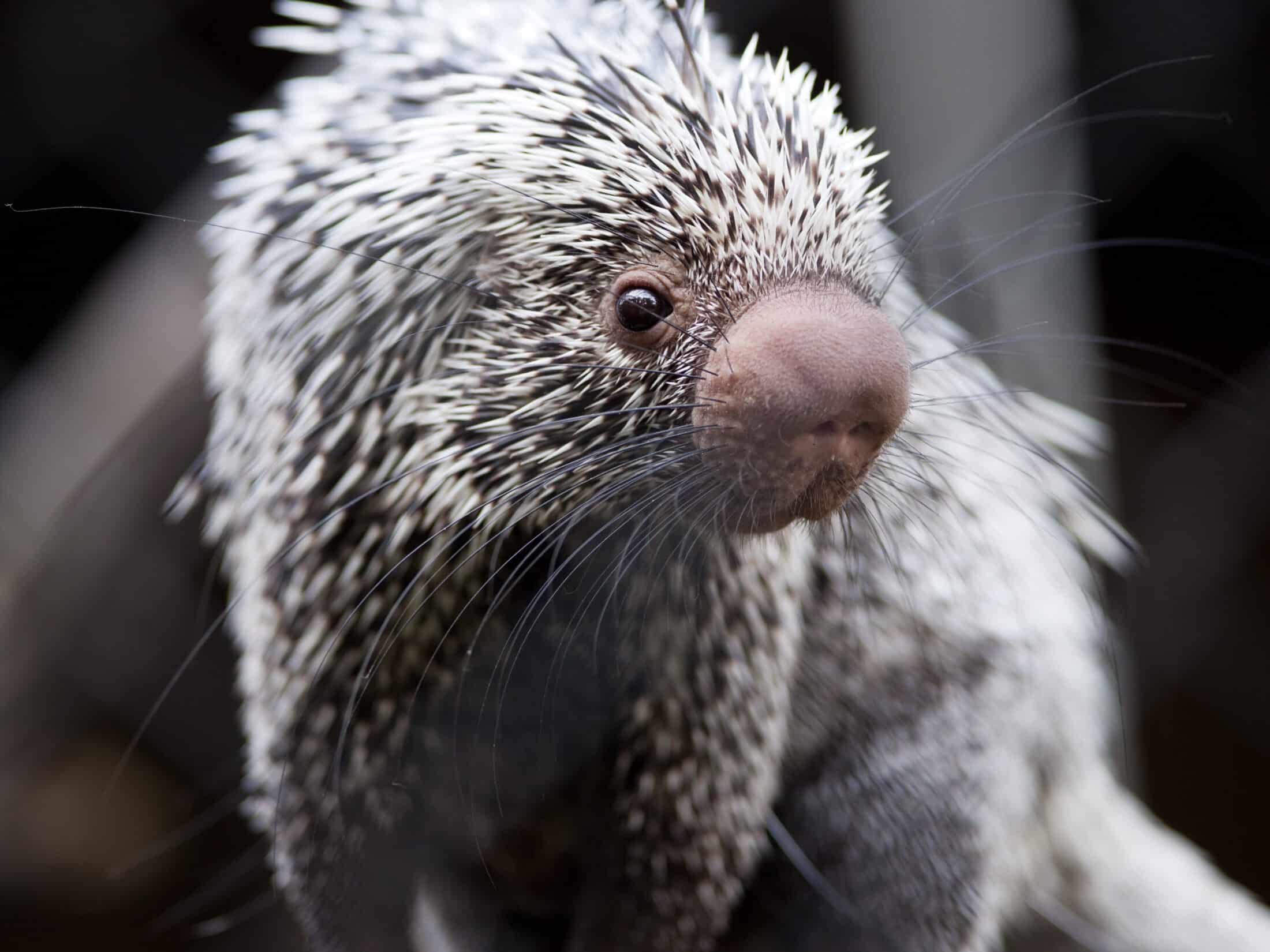
Native Location: South America
Herbivore – leaves, shoots, fruits, bark, roots, and buds.
- Using their prehensile tail and modified front and back feet to hold branches, this porcupine species spends most of its life in trees.
- They are known to move to a new tree each day.
- Like many nocturnal animals, this porcupine has poor eyesight but has keen senses of smell, hearing, and touch.
- They have no designated breeding season; they can breed year-round.
- Prehensile-tailed porcupines are monogamous.
North American Porcupine | Erethizon dorsatum
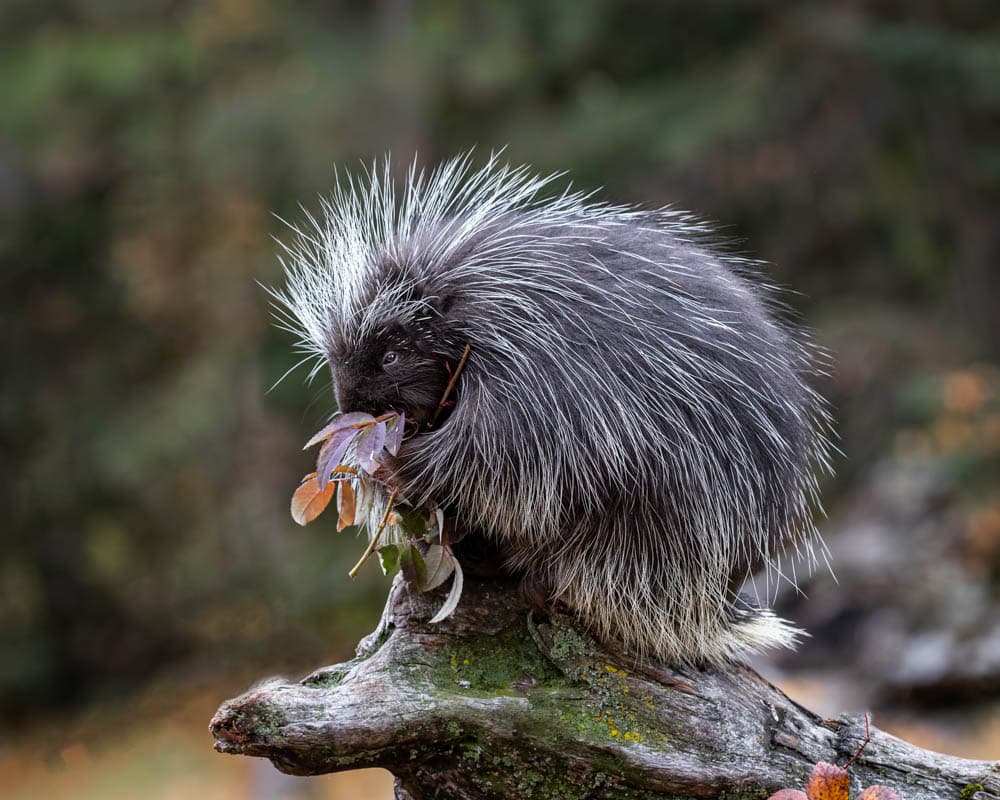
Native Location: North America
Herbivore – leafy greens, roots, tubers, and bark.
- American porcupines spend most of their time on the ground but climb trees to forage for food.
- They are covered in over 25,000 barbed quills. It’s a common myth that they shoot them out, but that’s not true. Instead, they warn off predators by fanning their quills and slapping their tails on the ground. If the predator persists, the porcupine whips its tail into the animal, leaving its quills stuck in the predator’s skin.
- Baby porcupines are called porcupettes!
Sunda Porcupine | Hystrix javanica
Information coming soon
Black-tailed Prairie Dog | Cynomys ludovicianus (with video)
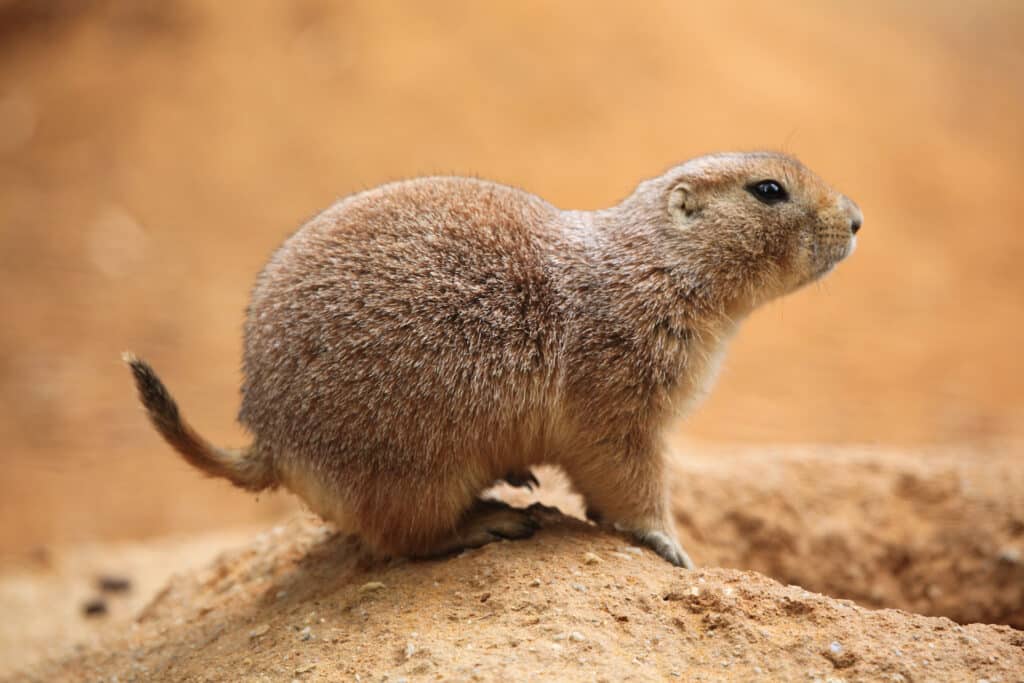
Native Location: North America
Herbivore – grasses, flowers, roots, seeds, and insects
- Prairie dogs are very communicative animals, known for their excited “yahoos,” where they jump up and cheer.
- Prairie dogs greet each other by “kissing.” They will go up to their friend and touch their teeth together.
- This animal is very social, living in underground burrows called prairie dog towns.
- Coyotes, badgers, and eagles are their main predators.
Striped Skunk | Mephitis mephitis
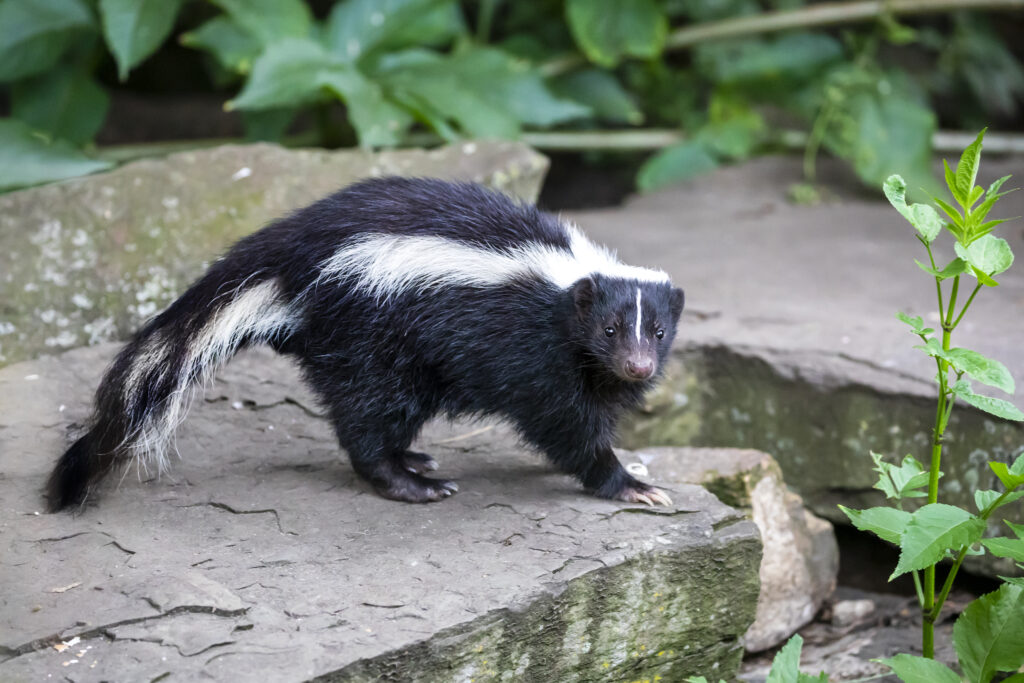
Native Location: North America
Omnivore – bugs, meat, vegetation, fallen fruits, and human trash
- Skunks are nocturnal animals with a unique and well-known defense mechanism against predators: spraying.
- Skunks have a limited amount of spray in their body that needs time to replenish. They try to scare predators off by stomping their feet or kicking themselves into a handstand to reserve their spray.
- They are excellent diggers and will live in underground dens that they dig themselves.
- Skunks are immune to snake venom and bee stings.
Tamandua Anteater | Tamandua tetradactyla (with video)
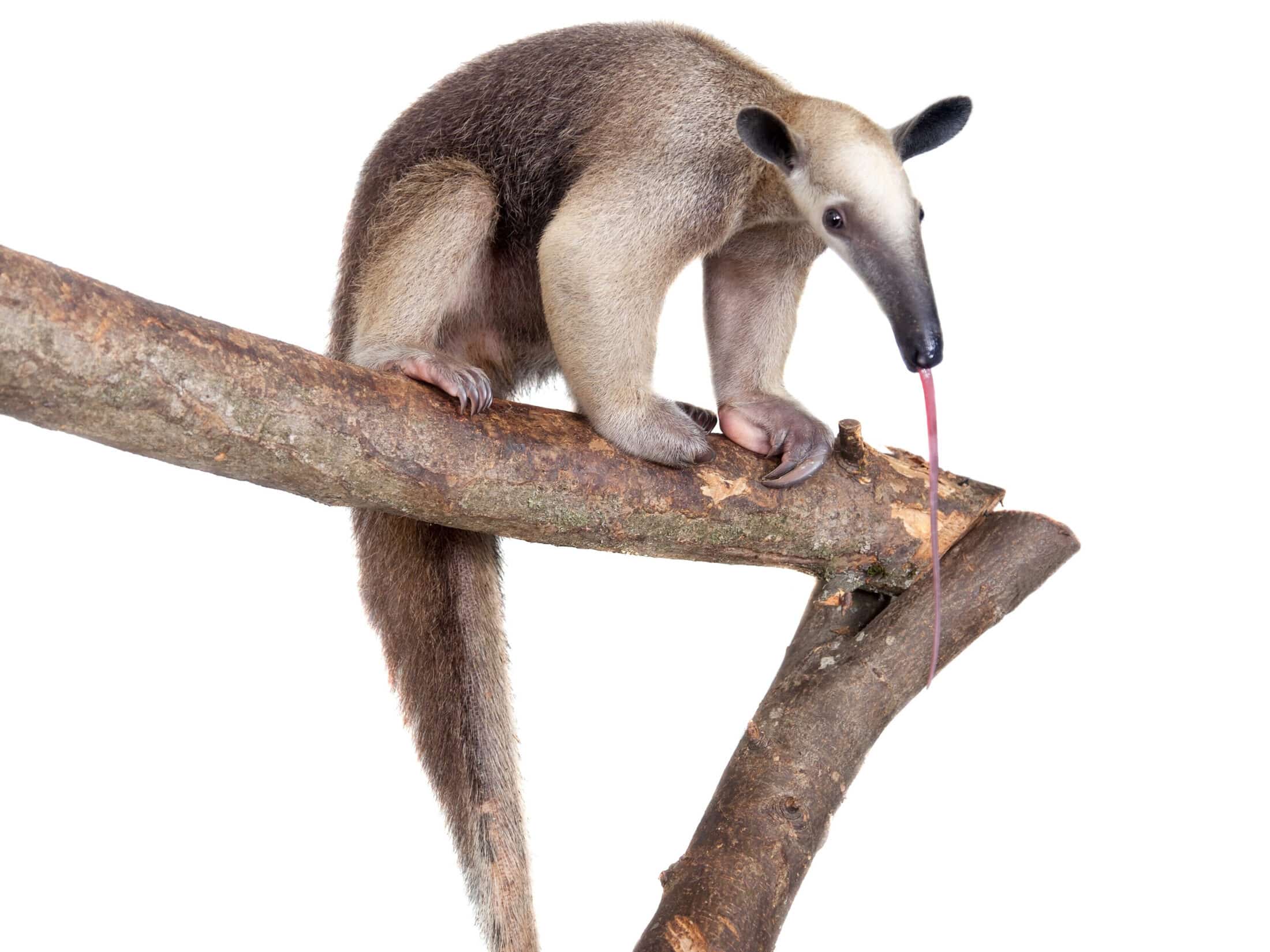
Native Location: South America
Carnivore – ants and termites
- The lesser tamandua is a slow-moving animal in the family Myrmecophagidae, which means “ant-eater” in Latin.
- Their body is unique. They have stiff, leathery skin, exceptionally long claws, a prehensile tail, and a long, skinny tongue.
- They use their strong claws to break into things like termite mounds and old logs to find food. Their long tongue can scoop up tiny bugs.
- They are primarily arboreal animals, spending most of their time in trees.
Tayra | Eira barbara
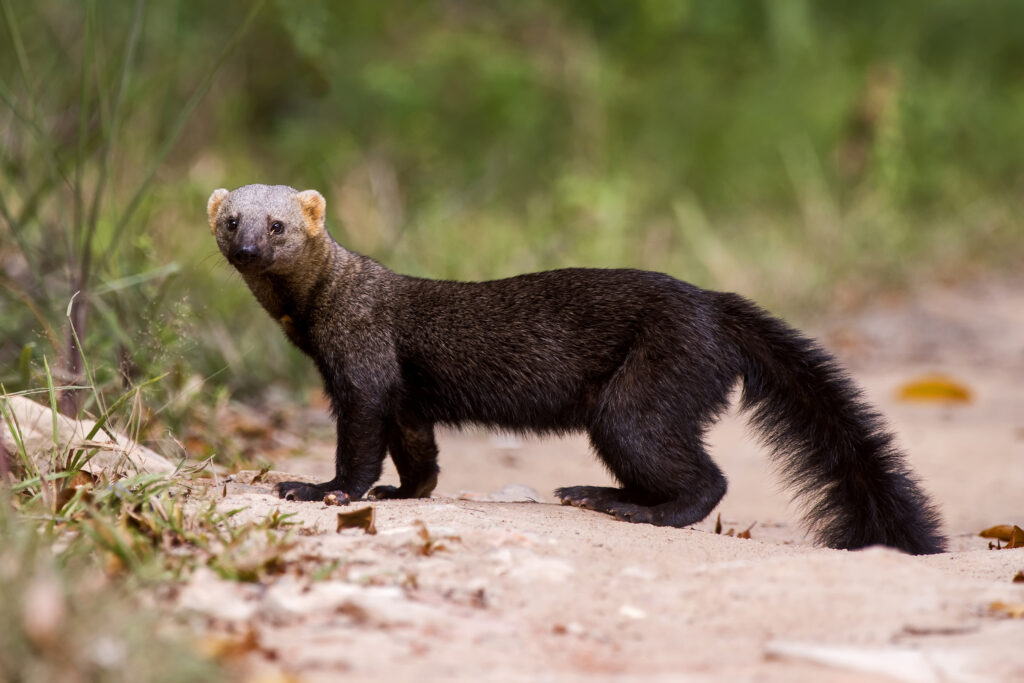
Native Location: South America and Mexico
Omnivores – small prey, fruits, vegetation, bugs, and fish
- Tayras are a part of the Mustelidae family, related to weasels, otters, badgers, and wolverines.
- They are swift animals. They can run, climb, and swim with agility and speed.
- They are mainly nocturnal animals.
- They are very playful animals, but do not get along well with others.
- Tayras live in hollow trees, burrows, and small nests.
Agile Wallaby / Sandy Wallaby | Macropus agilis
Information coming soon
Bennett’s Wallaby | Notamacropus rufogriseus (with video)
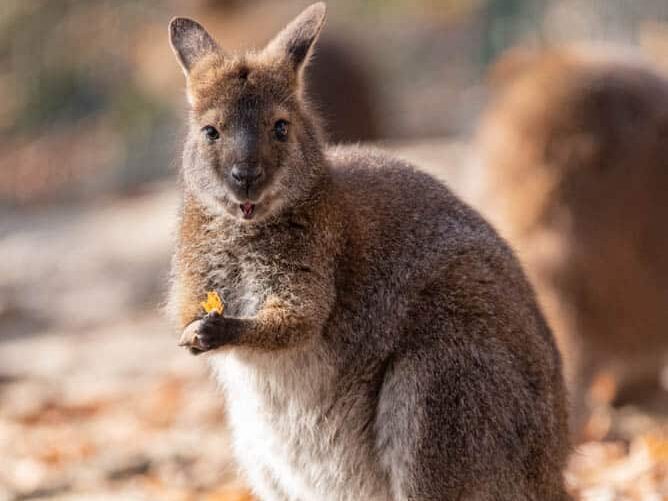
Native Location: Australia
Herbivore – vegetation, grass, and roots
- The Bennett wallaby, also known as the red-necked wallaby, is in the macropod family, so it is related to kangaroos, tree kangaroos, and quokkas.
- Wallabies and kangaroos are marsupials. So when their bumblebee-sized joeys are born, they crawl into the momma’s pouch, where they do the rest of their development.
- They are most active at dawn and dusk to avoid the midday heat.
- They are solitary but not territorial animals, bounding away at the first sign of danger.
Woodchuck / Groundhog | Marmota monax
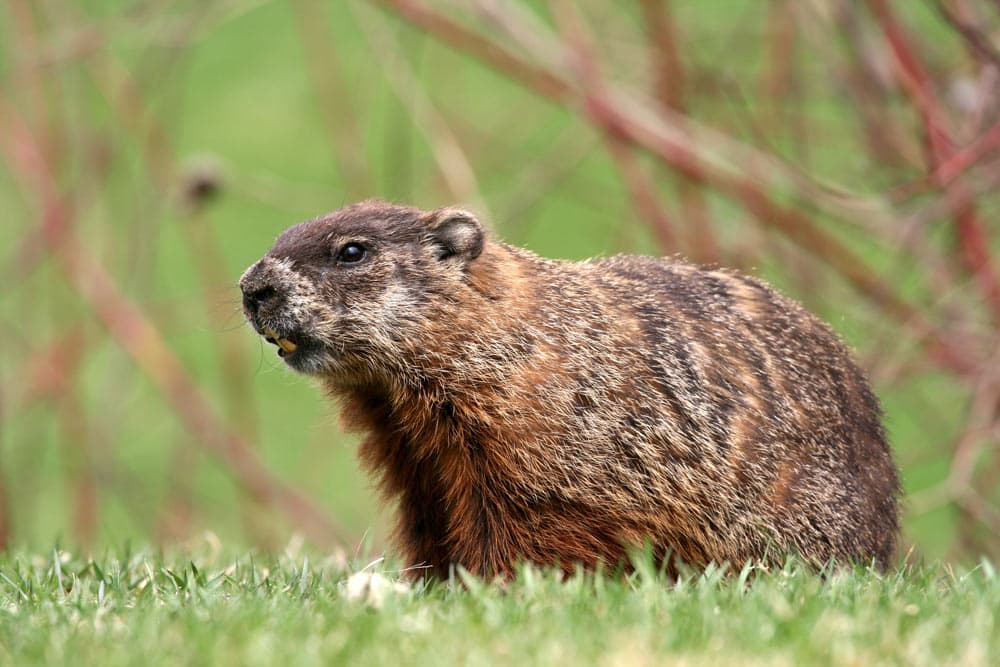
Native Location: North America
Herbivore – vegetation, fruits, grasses, and flowers
- The groundhog, or the Woodchuck or Whistle-pig, is in the rodent family. They get their alternative name, “Whistle-pig,” from the high-pitched call they use to alert their colonies of any danger.
- They spend their springs, summers, and falls gorging on food to prepare for winter. Then, they hibernate until the spring or until Groundhog Day.
- Groundhogs have a holiday named after them; according to tradition, if a groundhog sees its shadow on February 2nd, you can expect six more weeks of winter.
Reptiles & Amphibians (Only At Burnsville)
Green Anole | Anolis carolinensis
Information coming soon
Axolotl | Ambystoma mexicanum
Information coming soon
Smooth-fronted caiman | Paleosuchus trigonatus
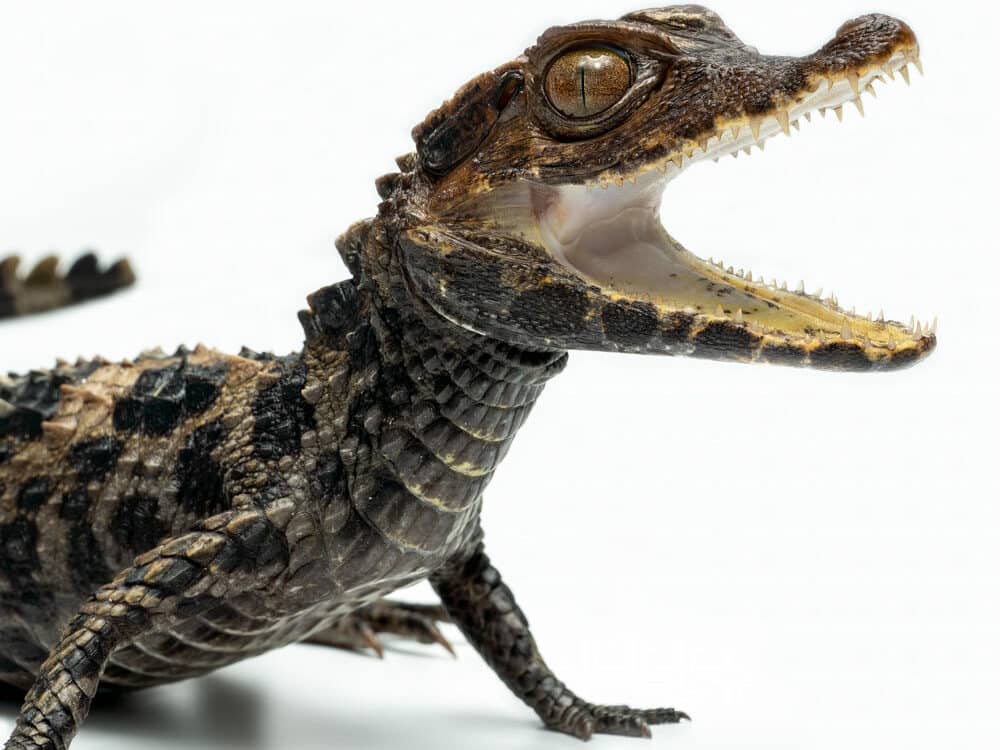
Native Location: South America
Carnivore – fish, amphibians, small mammals, birds, crabs, shrimp, mollusks, and other invertebrates
- Dwarf caiman are the smallest crocodilian species.
- Adult caiman are found alone or in pairs.
- They communicate and identify one another through sounds, movements, stances, smells, and touch.
Cuban Treefrog | Osteopilus septentrionalis
Information coming soon
Ringed Wall Gecko | Tarentola annularis
Information coming soon
Amazon Racerunner | Ameiva ameiva
Information coming soon
Madagascar girdled lizard | Zonosaurus madagascariensis
Information coming soon
Weber’s sailfin lizard | Hydrosaurus weberi
Information coming soon
Tiered Bamboo Milk Snake | Oreocryptophis porphyraceus
Information coming soon
Western Coachwhip | Masticophis flagellum
Information coming soon
Tiger Salamander | Ambystoma tigrinum
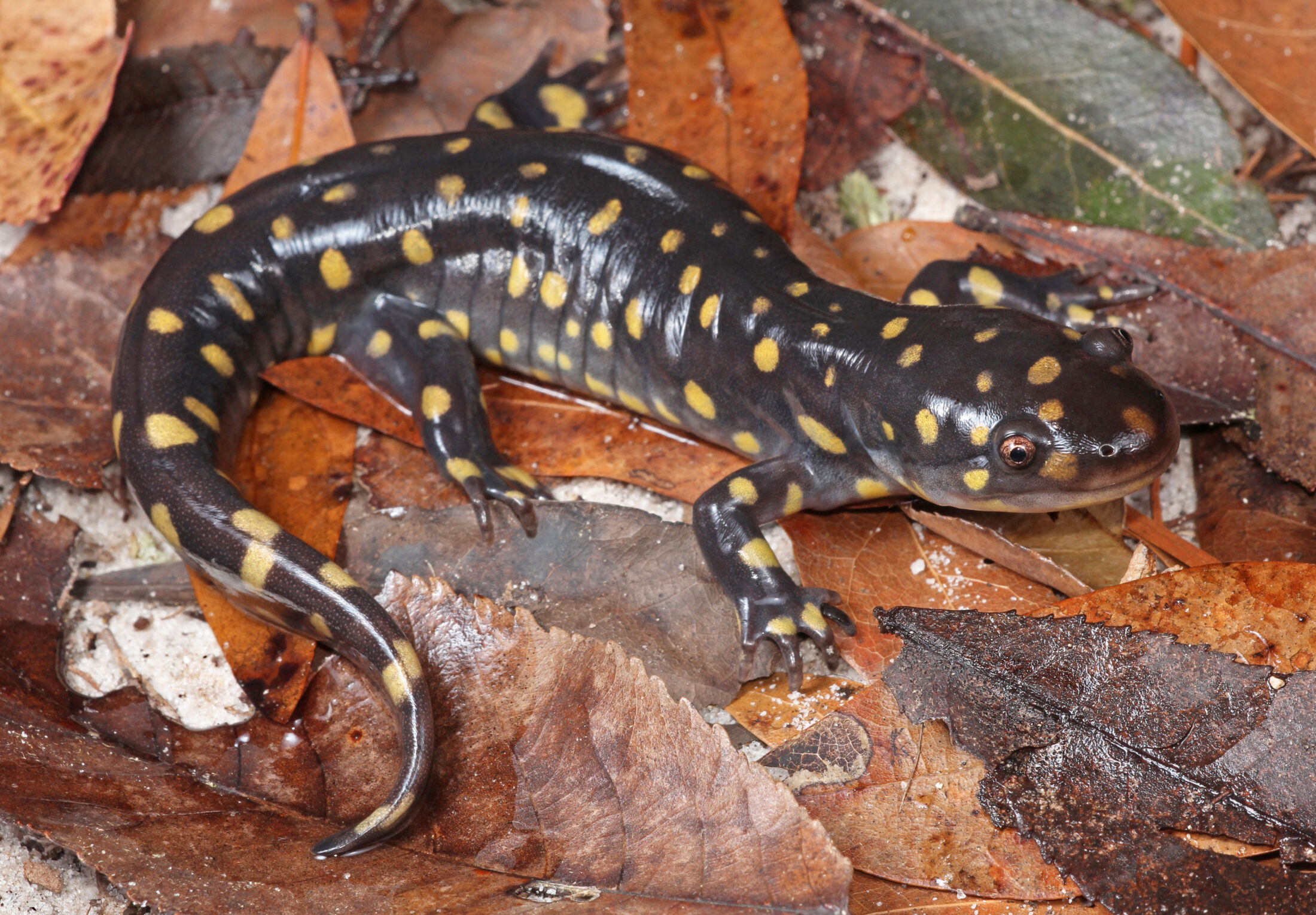
Native Location: North America
Carnivore – worms, snails, insects, and slugs
- Clutch size 20-30 eggs. The eggs only take 12-15 days to develop and hatch.
- The female lays the eggs on twigs and leaves at the bottom of a water pool.
- The larvae have external gills and are entirely aquatic.
- Salamanders have very sensitive and absorbent skin.
- Salamanders are very sensitive to environmental change and pollution and are what scientists call “Indicator Species,” or species that are highly intolerant of pollution and environmental change.
Argentine black and white tegu | Salvator merianae
Information coming soon
Eastern narrow-mouthed toad | Gastrophryne carolinensis
Information coming soon
Bell’s hinge-back tortoise | Kinixys belliana
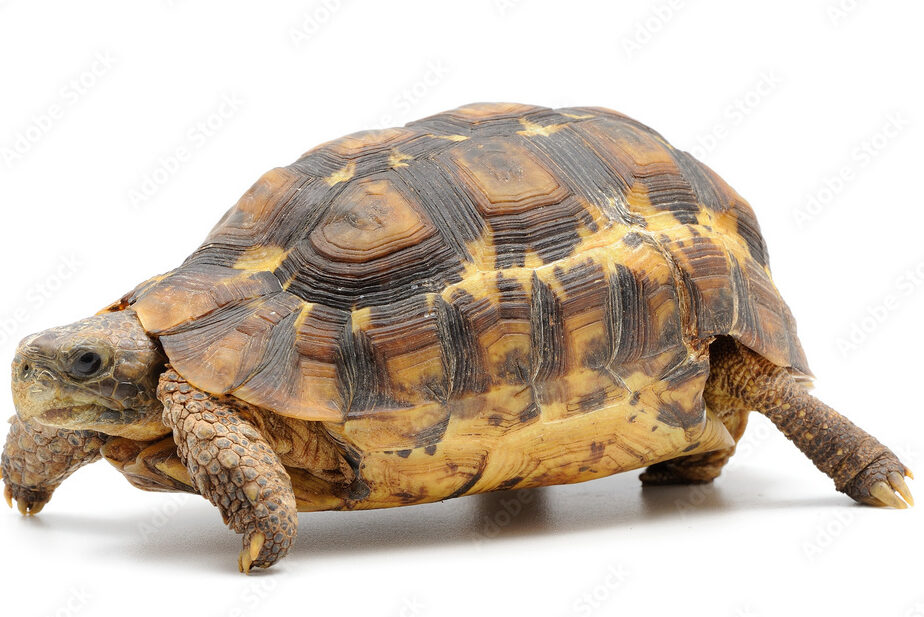
Native Location: Africa
Omnivore – vegetables, twigs, roots, leaves, fruits, earthworms, snails, tadpoles, and other small invertebrates
- The ability to clamp down the rear portion of their shell to protect their vulnerable tail and back legs is how they earned the name hinge-back. When threatened, this tortoise can also partially retract its head into its shell and cover the opening with its front legs, which are protected by large scales.
- It can store water in anal sacs to help it survive dry periods.
Hermann’s Tortoise | Testudo hermanni
Information coming soon
Horsfield’s Tortoise / Russian Tortoise) | Testudo horsfieldii
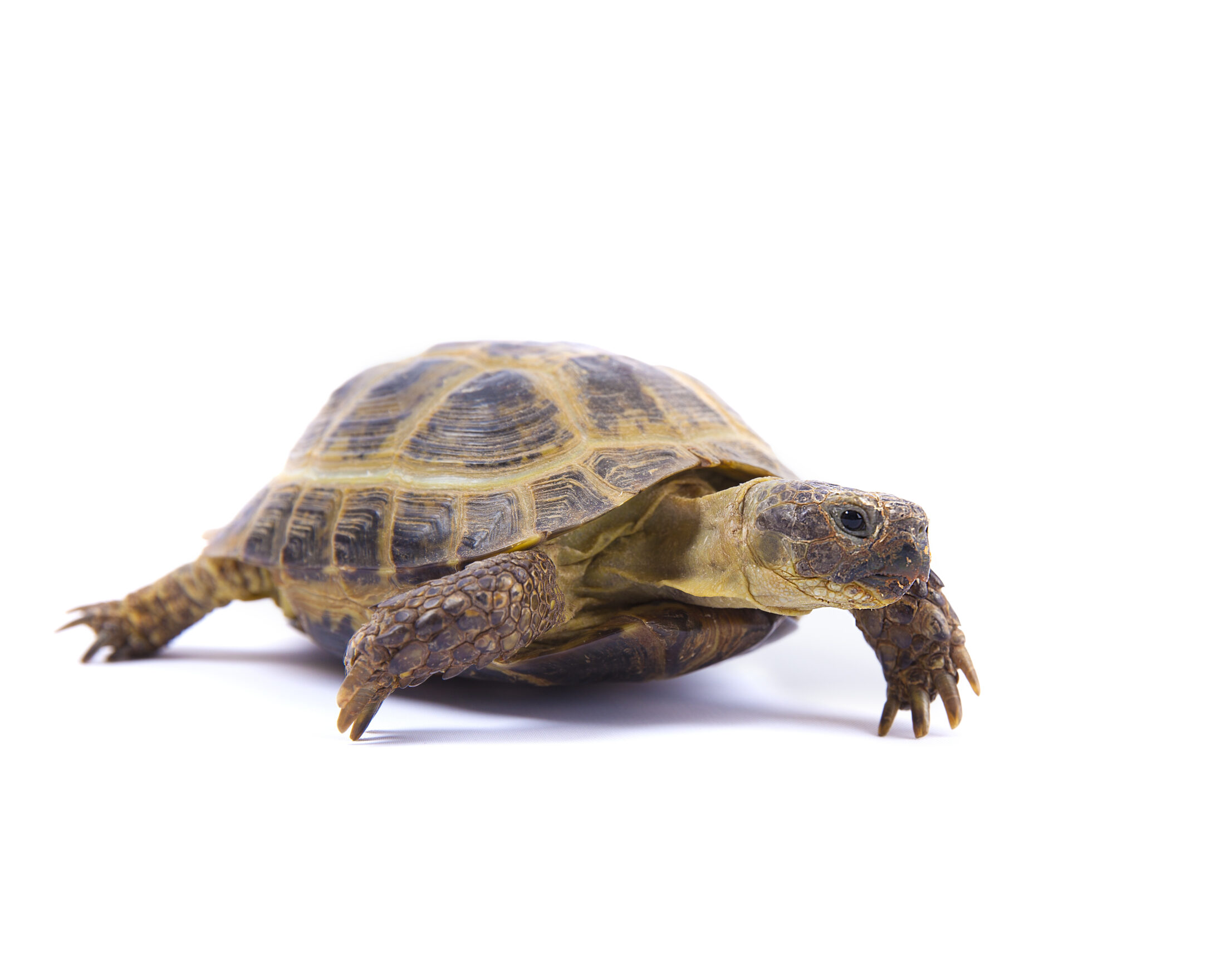
Native Location: Asia
Herbivore – grasses, twigs, flowers, and some fruits.
- Russian tortoises have four toes on each foot.
- The male Russian tortoise courts a female by headbobbing, circling, and biting her forelegs.
- On average, Russian tortoises will hibernate for about eight weeks to five months throughout the year if the conditions are right. The species can spend up to 9 months of the year in dormancy.
- These tortoises are pretty social, and they will visit nearby burrows, and sometimes several will spend the night in one burrow.
- Tortoises have both an exoskeleton and an endoskeleton. A shell is in three main parts: the carapace on the top, the plastron on the bottom, and the bridge that joins these pieces together. Every tortoise has ribs, a spine, and a collarbone inside its shell.
Sulcata Tortoise | Centrochelys sulcata
Information coming soon
Black Pond Turtle | Geoclemys hamiltonii
Information coming soon
Chinese stripe-necked turtle | Mauremys sinensis
Information coming soon
Coastal plain cooter | Pseudemys floridana
Information coming soon
Diamond-head Turtle | Emydura subglobosa
Information coming soon
Florida softshell turtle | Apalone ferox
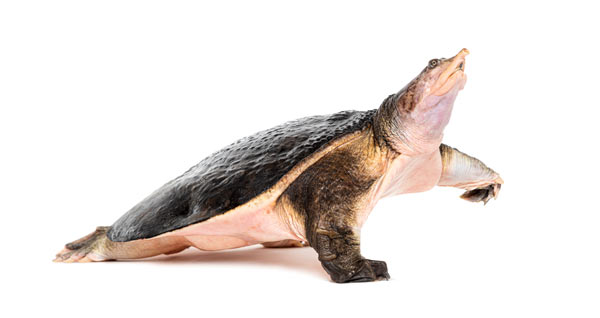
Native Location: North America
Carnivore – snails, insects, fish, crustaceans, and have rarely been documented to eat small birds.
- Florida softshells are the largest North American softshell turtle.
- When it feels threatened, it buries itself in the sand and leaves its head visible.
- These turtles can also breathe underwater through the pharyngeal, cloacal, and skin linings.
Gibba turtle | Mesoclemmys gibba
Information coming soon
Malayan softshell turtle | Dogania subplana
Information coming soon
Painted Terrapin | Batagur borneoensis
Information coming soon
Painted turtle | Chrysemys picta
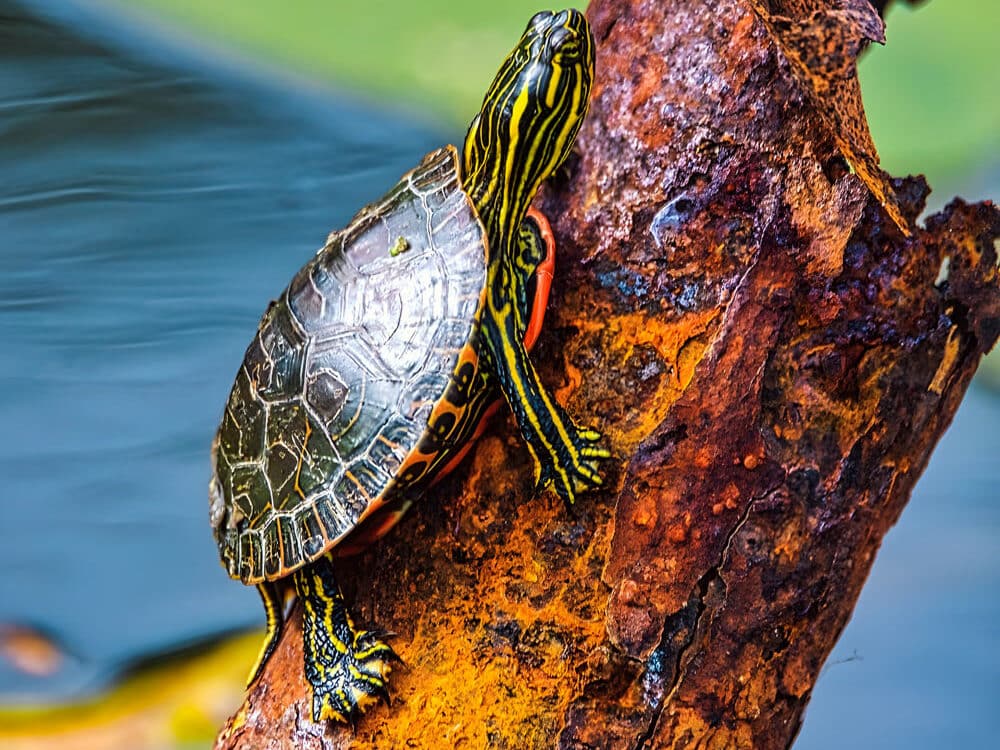
Native Location: North America
Omnivore – insects, small animals, fish, and vegetation
- During winter, painted turtles lower their metabolism and body temperature to enter brumation (reptilian hibernation).
- These turtles love the sun and come out of the water to bask in the sun’s rays during the day.
Pig-nosed turtle | Carettochelys insculpta
Information coming soon
Razor-backed musk turtle | Sternotherus carinatus
Information coming soon
Scorpion mud turtle | Kinosternon scorpioides
Information coming soon
Spiny Softshell Turtle | Apalone spinifera
Information coming soon
West African Mud Turtle | Pelusios castaneus
Information coming soon
Yellow-bellied slider | Trachemys scripta scripta
Information coming soon
Birds (Only At Burnsville)
Muscovy duck | Cairina moschata
Information coming soon
Emu | Dromaius novaehollandiae (with video)
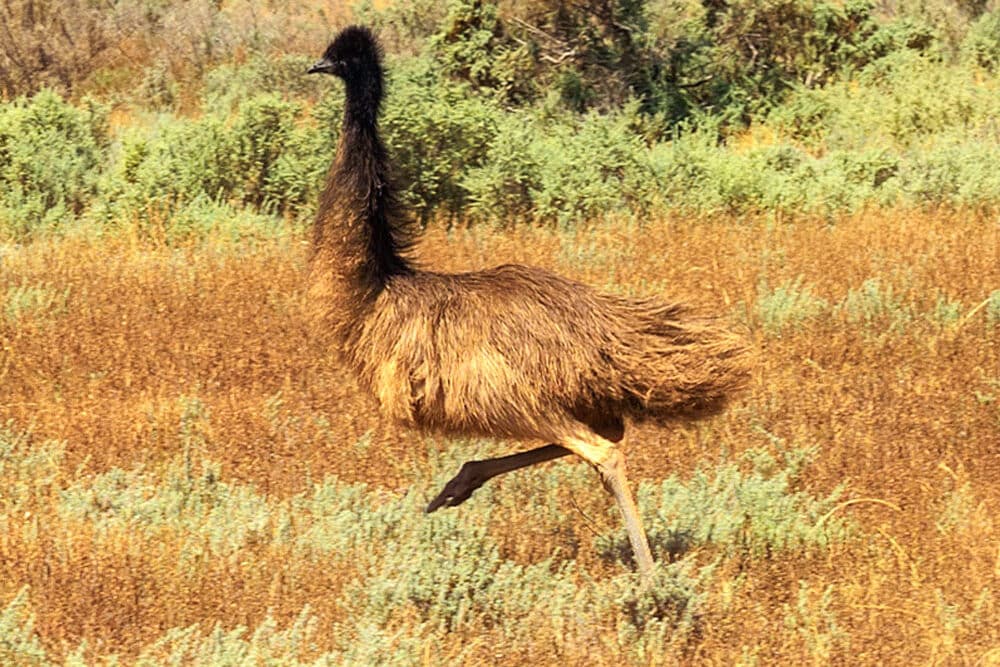
DIET | Herbivore – seeds, fruits, flowers, and young shoots
- The Emu is not very intelligent. Their eyes are larger than their brain!
- While they are flightless, they are excellent runners and swimmers.
- The emu is part of the ratite family, which includes the cassowary, ostriches, and rheas.
- Back in 1932, Australia waged war on a large population of emus that were raiding farmers’ crops. Humans lost the war.
- Emu lays green eggs!
Nēnē / Hawaiian Goose | Branta sandvicensis
Information coming soon
Laughing kookaburra | Dacelo novaeguineae
Information coming soon
Coconut lorikeet | Trichoglossus haematodus
Information coming soon
Blue-and-yellow macaw | Ara ararauna
Information coming soon
Military macaw | Ara militaris
Information coming soon
Canary-winged parakeet | Brotogeris versicolor
Information coming soon
Crested partridge | Rollulus rouloul
Information coming soon
Victoria-crowned pigeon | Goura victoria
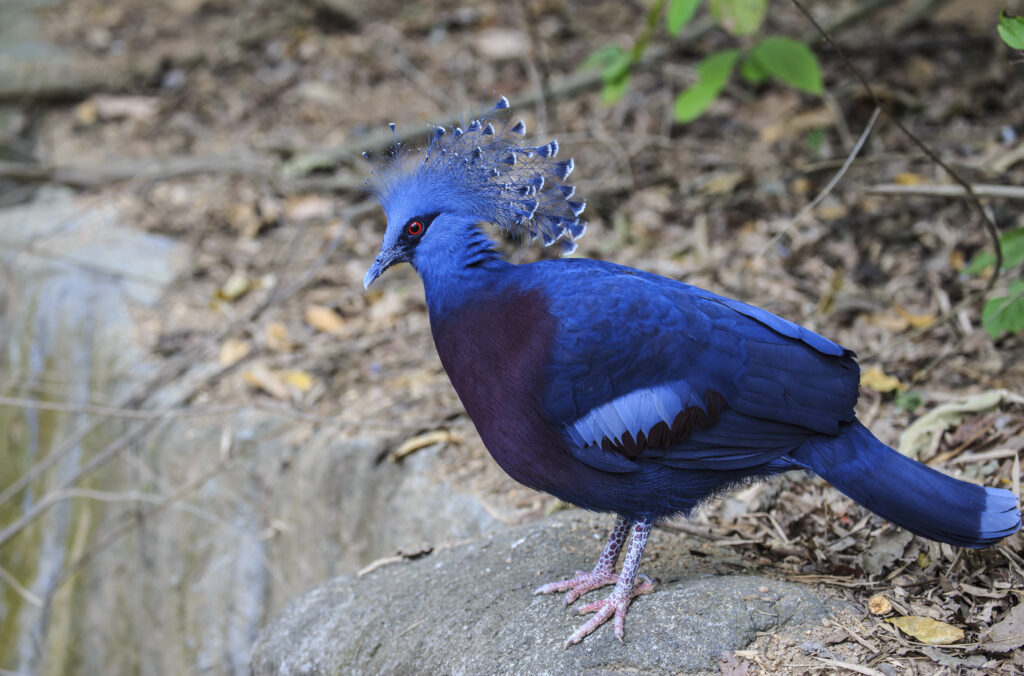
Native Location: New Guinea
Omnivore – fallen fruits, berries, seeds, and occasionally small invertebrates.
- This species was named in honor of the British monarch, Queen Victoria.
- It is considered the largest surviving pigeon species on Earth.
- Victoria-crowned pigeons spend most of their time on the ground and fly up into trees only when disturbed or to roost at night.
- Victoria crowned pigeons are monogamous and mate for life.
- Like other crowned pigeons, the Victoria crowned pigeon is a gregarious species. The Victoria crowned pigeon often gathers in groups of 2-10 individuals. They usually travel in pairs or small parties as they search for food.
Invertebrates (Only At Burnsville)
Zombie Crab | Gecarcinus ruricola
Information coming soon
African millipede | Archispirostreptus gigas
Information coming soon
Costa Rican tiger rump | Cyclosternum fasciatum
Information coming soon
Goliath birdeater | Theraphosa blondi
Information coming soon
Available at Maplewood Mall, Sustainable Safari
Mammals (Only At Maplewood)
Seven-banded armadillo | Dasypus septemcinctus
Information coming soon
Malaysian Binturong | Arctictis binturong
Native Location: Palawan Islands, Philippines
Omnivore – fruits, small animals, eggs, and bugs
- This animal is incredibly agile and can easily hop through thick forest trees.
- The binturong is the largest animal in the world with a prehensile tail, which they use to hang upside down or to securely grasp trees.
- Do you smell buttered popcorn? That’s the natural musk of the binturong!
- Binturongs, nicknamed bearcats for obvious reasons, are classified in the small family of carnivorous mammals called Viverridae.
Northern greater galago / Bushbaby | Otolemur garnettii
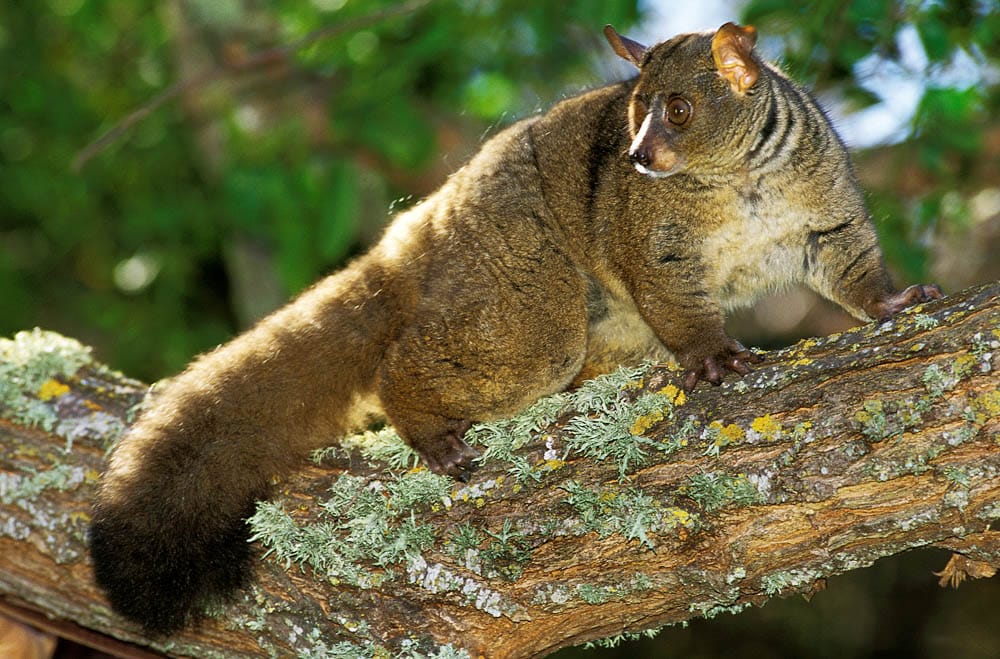
Native Location: Africa
Omnivore – plants, fruit, tree sap, small prey, and insects
- The bushbaby, also known as the brown greater galago, is a nocturnal animal with huge eyes that catch the light even in the darkest environments. They are often called night monkeys.
- They are found in forests all across Africa. They easily blend into their environment with their dark brown fur.
- This animal is very territorial, often showing aggression when lesser animals enter its territory. They mark their territory by urinating on their hands and jumping from trees to spread their scent.
Short-tailed Chinchilla | Chinchilla chinchilla (with video)
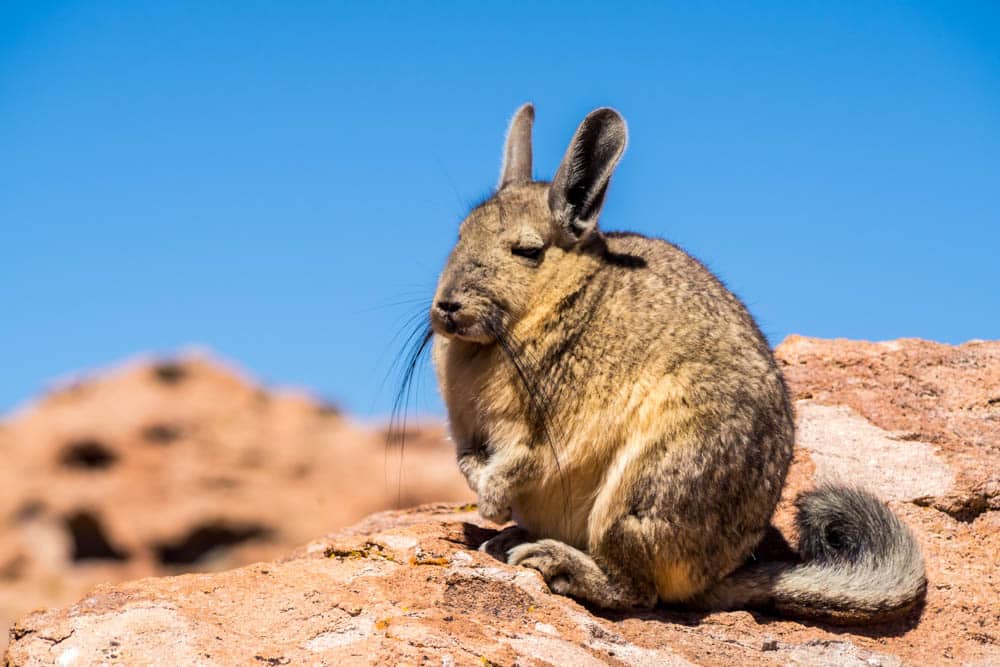
Native Location: South America
Primarily herbivorous – vegetation, grass, seeds, leaves, and bugs
- The Chinchilla lives in mountainous areas. They live in crevices and dens at elevations of up to 16,000 feet. They thrive in cold temperatures.
- Chinchillas have incredibly dense fur, with up to 100 hairs per follicle. Humans have only 1-3 hairs per follicle.
- They have a unique defense mechanism against predators known as the “fur slip,” when the chinchilla feels threatened. They create a diversion by releasing large clumps of fur, distracting the predator so the chinchilla can quickly escape.
Red river hog | Potamochoerus porcus
Information coming soon
Kinkajou | Potos flavus
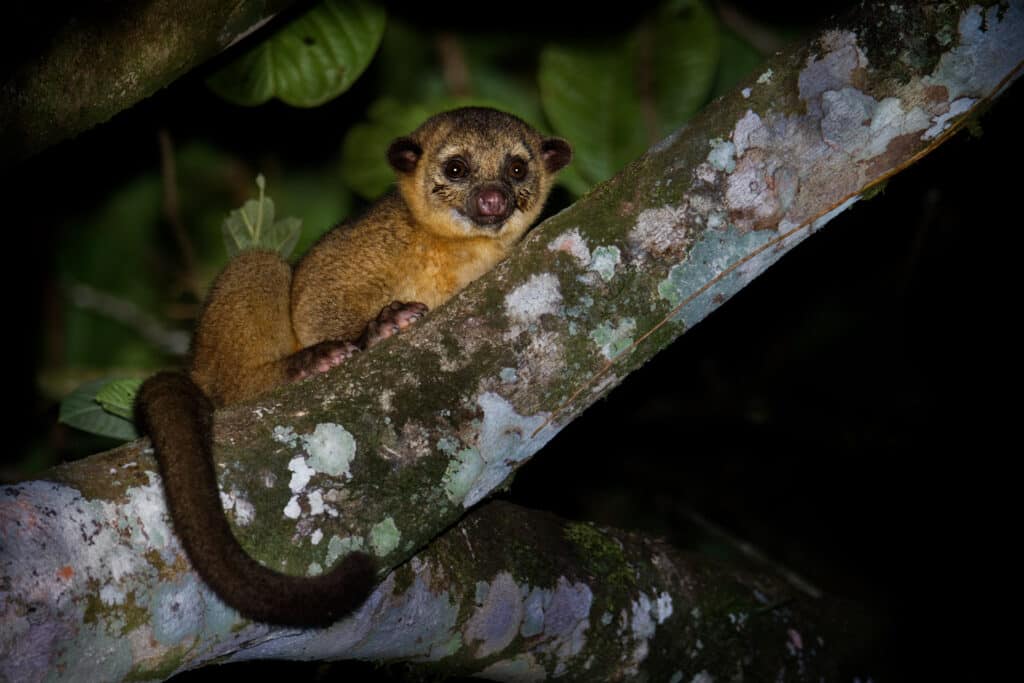
Native Location: South, Central, and North America
Herbivore/Frugivore – fruit and nectar
- The Kinkajou, also known as the “honey bear,” is a relative of raccoons and coatimundis.
- They have a long, narrow tongue, which they use to lap up flower nectar and honey from beehives.
- Kinkajous are essential pollinators. They catch pollen on their faces and spread it as they go from flower to flower, drinking the nectar.
- They can turn their feet in the opposite direction and run backward as swiftly as forward! They also have long, prehensile tails that help them climb through trees.
Northern Olingo | Bassaricyon gabbii
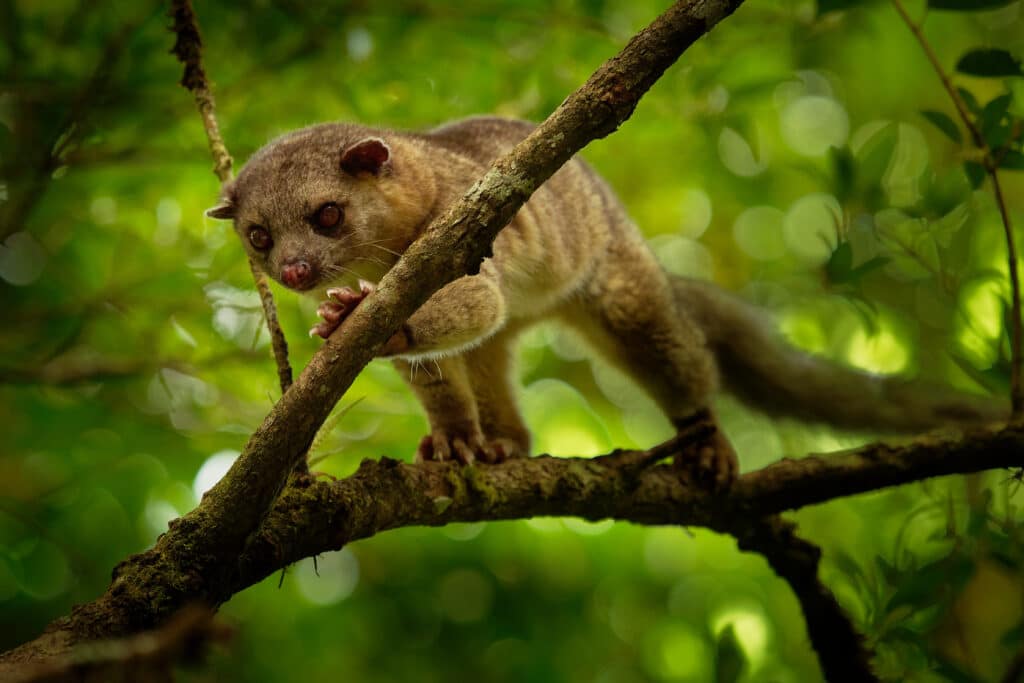
Native Location: South America
Herbivore/Frugivore – fruits, honey, and flower sap
- The Olingo belongs to the Procyonidae family, which includes raccoons, ringtails, kinkajous, and coatimundis. Although they highly resemble the kinkajou, their cousin, you can distinguish them from one another by their tails. The olingo’s tail is far bushier than the kinkajou’s.
- They can turn their feet in the opposite direction and run backward just as swiftly as running forward!
- They prefer to live in pairs but are otherwise very solitary animals.
Gray short-tailed opossum | Monodelphis domestica
Information coming soon
Owl Monkey | Aotus trivirgatus
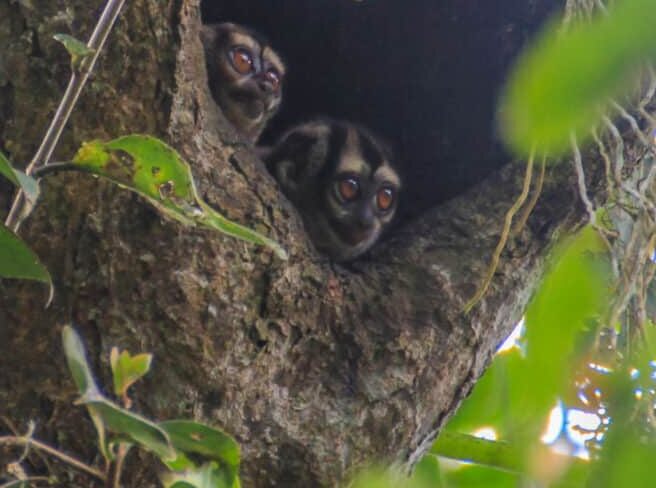
Native Location: South America
Omnivore – bugs, fruits, eggs, and vegetation
- The owl monkey (the “night monkey”) is a small nocturnal primate from South America.
- They never stray far from their territories, claiming one or two trees as their own and leaving only to eat.
- Baby owl monkeys cling to their mother’s backs until they are about five months old.
- They are the only nocturnal New World monkeys!
- They are monogamous; they bond with and mate with one partner for life.
Hoffmann’s Two-toed Sloth | Choloepus hoffmanni
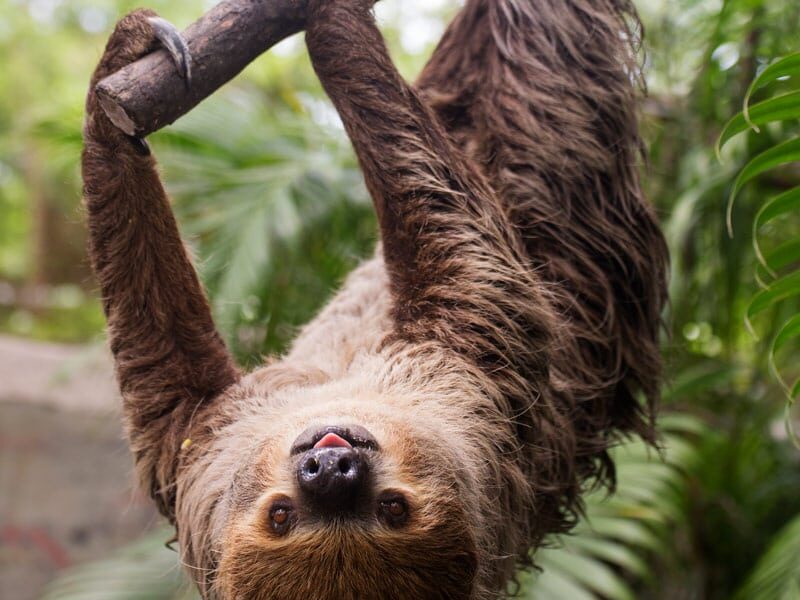
Native Location: South America
Herbivore – greens and vegetation
- The sloth is a slow-moving animal in the Xenarthra family, so it is related to armadillos and anteaters.
- Sloths are surprisingly good swimmers. They can drop into the water and swim to a new home territory.
- It can take a sloth 30 days to digest a leaf! On average, it takes them two weeks to digest food.
Richardson Ground Squirrel | Urocitellus richardsonii
Information coming soon
Sugar Glider | Petaurus breviceps (with video)
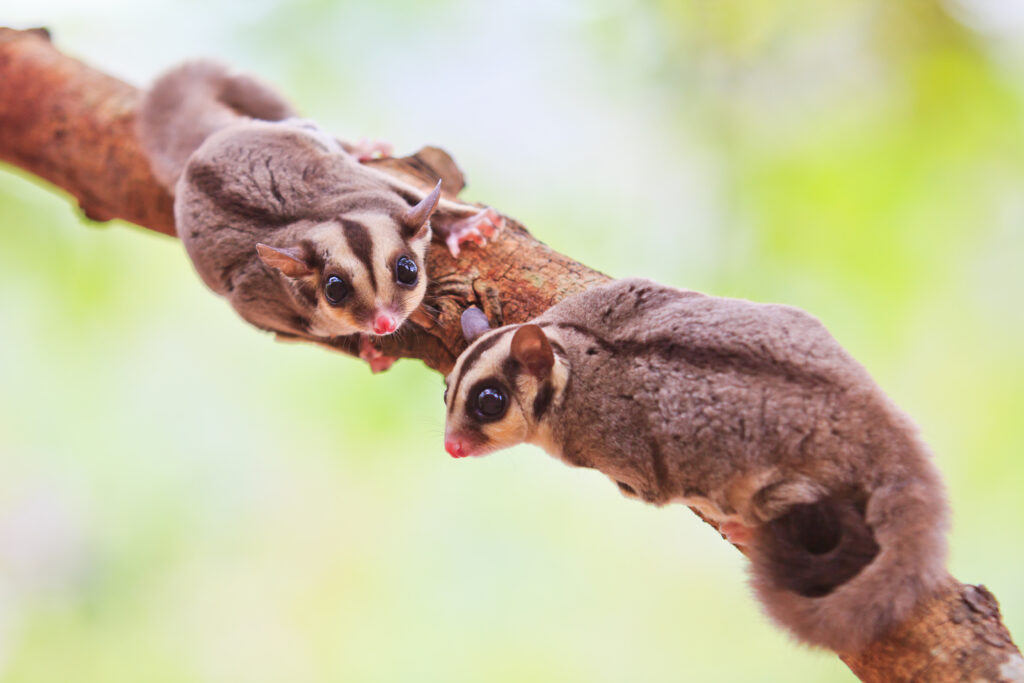
Native Location: Australia
Omnivore – insects, small vertebrates, Eucalyptus tree, sap, nectar, pollen, and fruits.
- Sugar Gliders get their name from their love of sweet foods and a thin membrane under their arms that allows them to glide through the air.
- They are marsupials, which means they carry their babies in their pouch, just like the kangaroo.
- In the wild, they spend most of their life gliding through trees. They rarely land on the ground.
- They are very social animals. They prefer living in prominent families of five or more.
Lesser Tenrec Hedgehog | Echinops telfairi (with video)
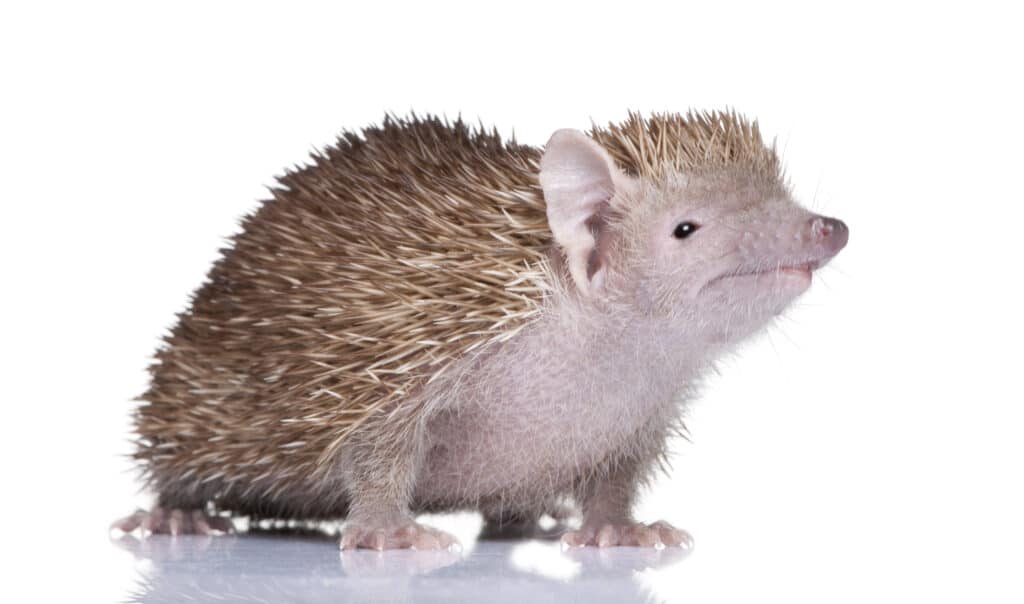
Native Location: Madagascar
Omnivore – insects and vegetation
- Despite its name and appearance, the lesser hedgehog tenrec is unrelated to the hedgehog. It is more closely related to the elephant than its prickly doppelganger.
- Tenrecs are nocturnal and very shy. They hide in their nests or underground burrows during the day.
- To protect themselves from predators, they may roll into a ball or burrow into the ground to avoid being seen.
- Tenrecs may have up to 32 offspring per litter.
Miniature Zebu | Bos taurus indicus
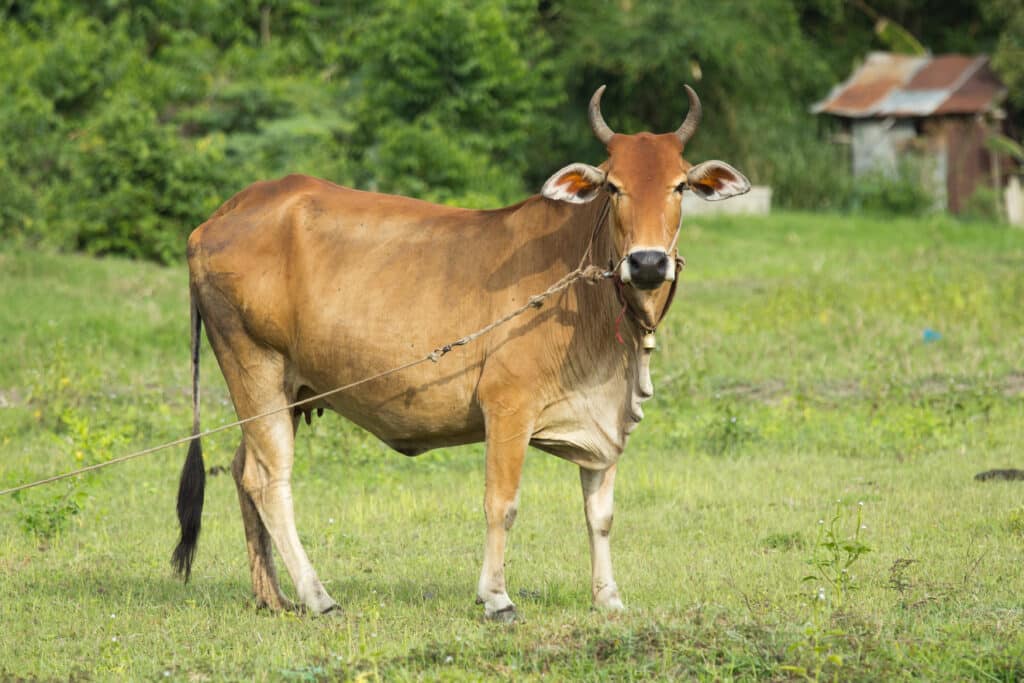
Native Location: Africa, Asia
Herbivore – grass and vegetation
- The miniature zebu is a herd animal, meaning it travels in large groups for protection from predators.
- In India, the zebu is considered sacred, and eating them is prohibited.
- Like a camel, the miniature zebu has a hump on its back used to store fat during periods of food scarcity. They also use their humps to help dissipate their body heat.
- The zebu has been domesticated for its productivity in hot, humid climates.
Reptiles & Amphibians (Only At Maplewood)
Cuban Knight Anole | Anolis equestris
Information coming soon
Columbian red-tailed boa | Boa constrictor imperator
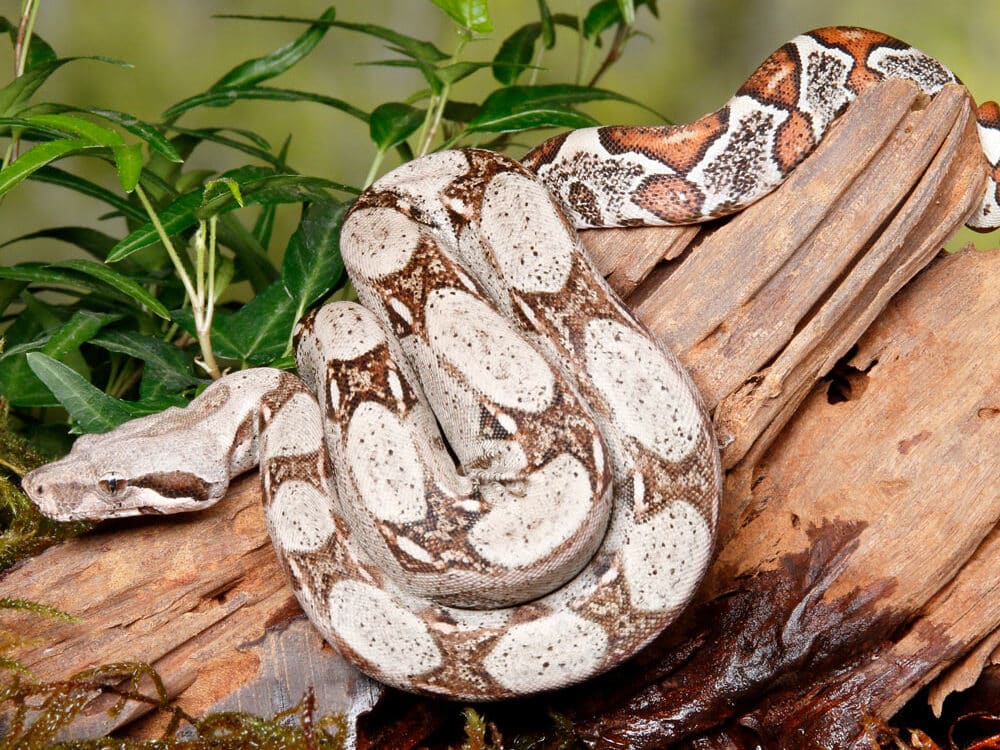
Native Location: South America
Carnivore – small to medium-sized mammals, birds, lizards, and amphibians
- Red-tailed boas are non-venomous constrictor snakes.
- These snakes do not lay eggs; they give live birth. Females incubate the eggs inside their bodies.
- After hatching inside the mother, she will give birth to up to 60 hatchlings.
Veiled Chameleon | Chamaeleo calyptratus
Information coming soon
Australian green tree frog | Litoria caerulea
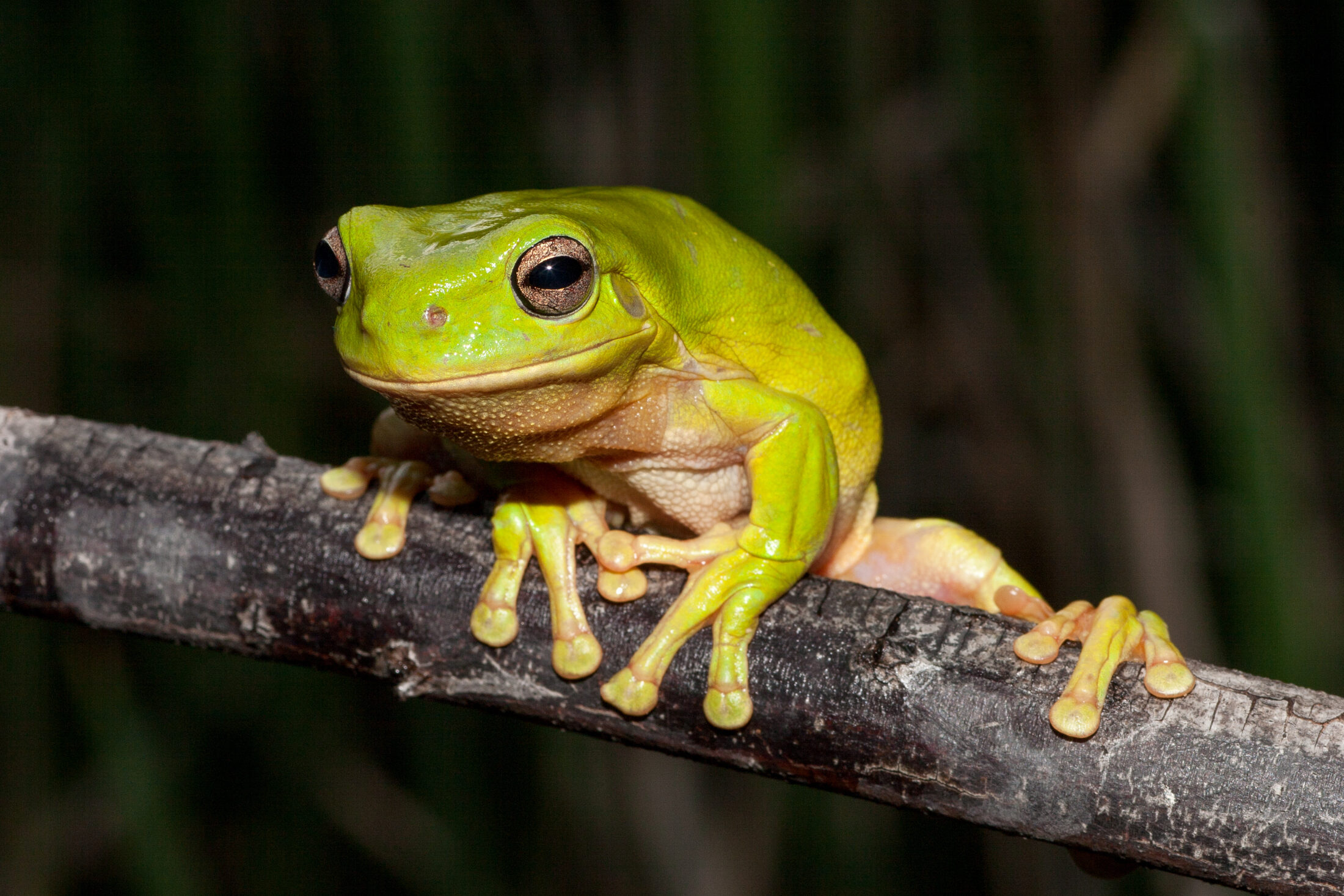
Native Location: Australia & Oceania
Carnivore – insects such as moths, cockroaches, and locusts. They also eat spiders and can include smaller frogs and even small mammals (including bats) among their prey.
- The Australian Green tree frog is also known as the Green tree frog, White’s tree frog, or the Dumpy tree frog.
- These frogs have enormous sticky toe pads with partially webbed toes.
- Their toes rely on wet adhesion, which is aided by mucus secretion.
- Docile and well-suited to living near human dwellings, Australian green tree frogs are often found on window sills or inside houses, eating insects drawn by the light.
Banded Bullfrog | Kaloula pulchra
Information coming soon
Cane Toad | Rhinella marina
Information coming soon
Giant African Bullfrog / Pixie Frog | Pyxicephalus adspersus
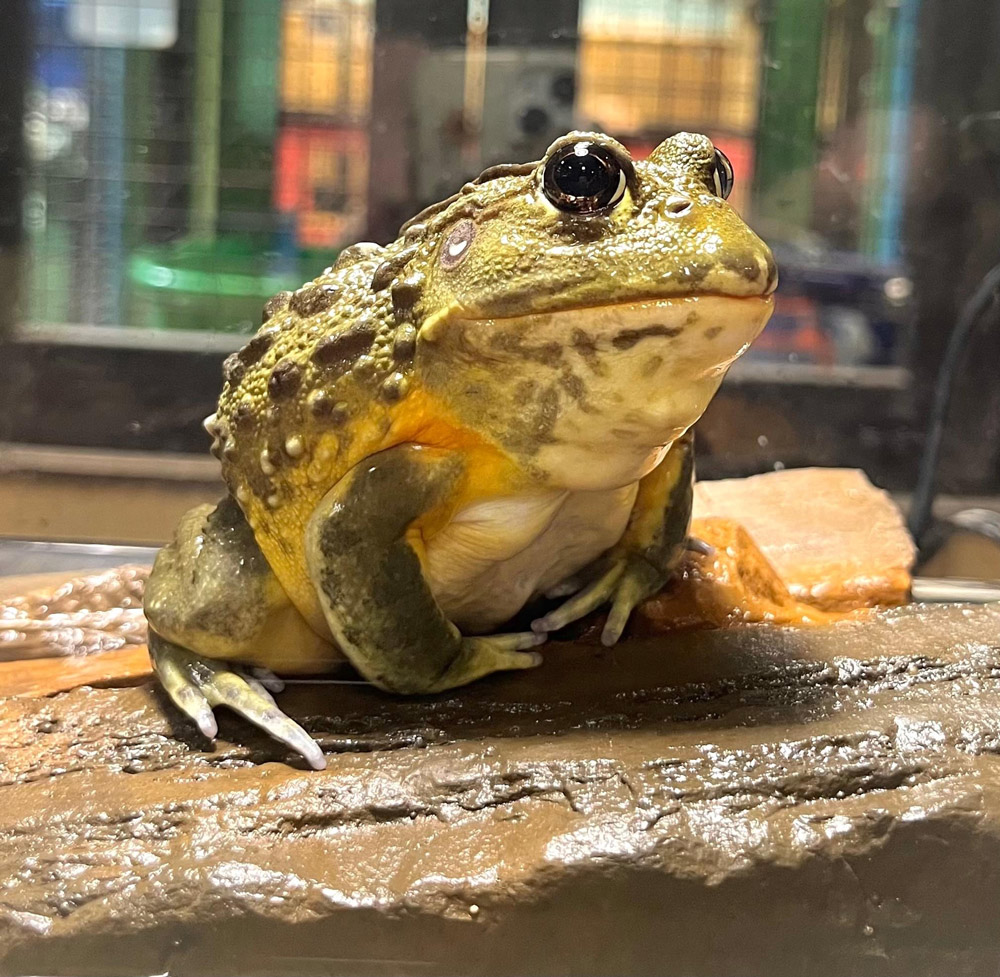
Native Location: Africa
Carnivore – insects, fish, mice, birds, other frogs, reptiles, and small mammals.
- The African Bullfrog has teeth and eats small mammals.
- They have giant clutches of eggs! They can have over 4,000 at a time!
- Males have yellow or orange bellies and throats. Females are beige underneath.
- Pixie frogs don’t chase their food; instead, they hide, waiting patiently, and ambush creatures that come close enough to be snatched up.
Vietnamese mossy frog | Theloderma corticale
Information coming soon
Common Leopard Gecko | Timon lepidus
Information coming soon
Madagascar giant day gecko | Phelsuma madagascariensis
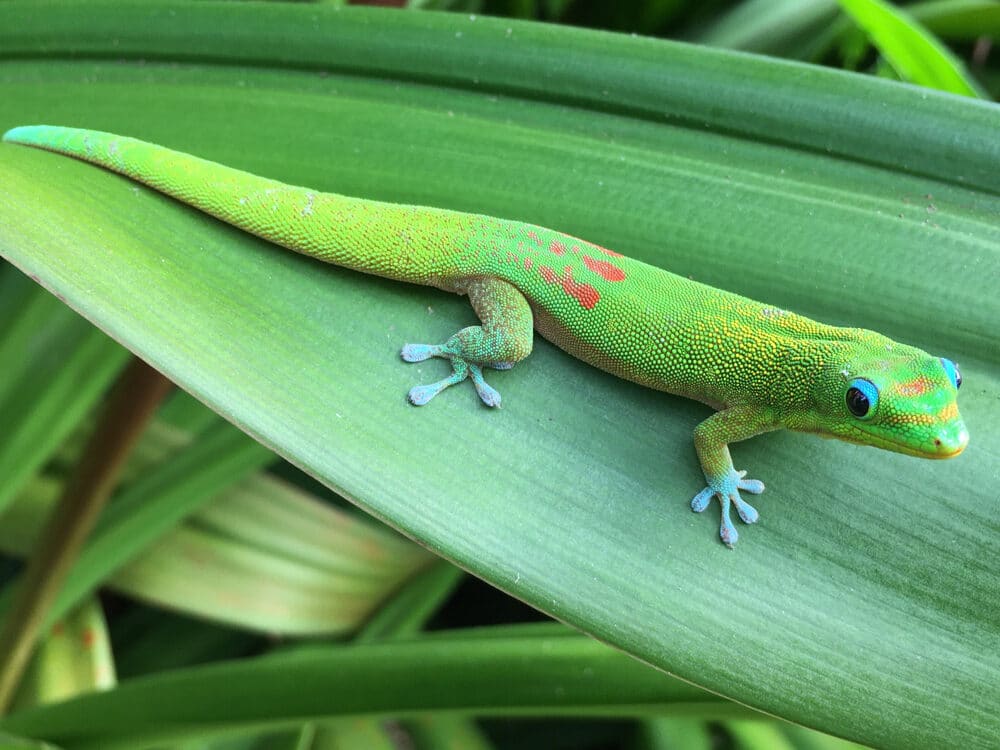
Native Location: Madagascar
Omnivore – insects, fruit, and nectar
- There are over 40 species of day geckos.
- They do not have claws; their fingers have small, flat, adhesive scales (lamella) that allow them to climb smooth surfaces.
New Caledonia Bumpy Gecko | Rhacodactylus auriculatus
Information coming soon
Common Green iguana | Iguana iguana
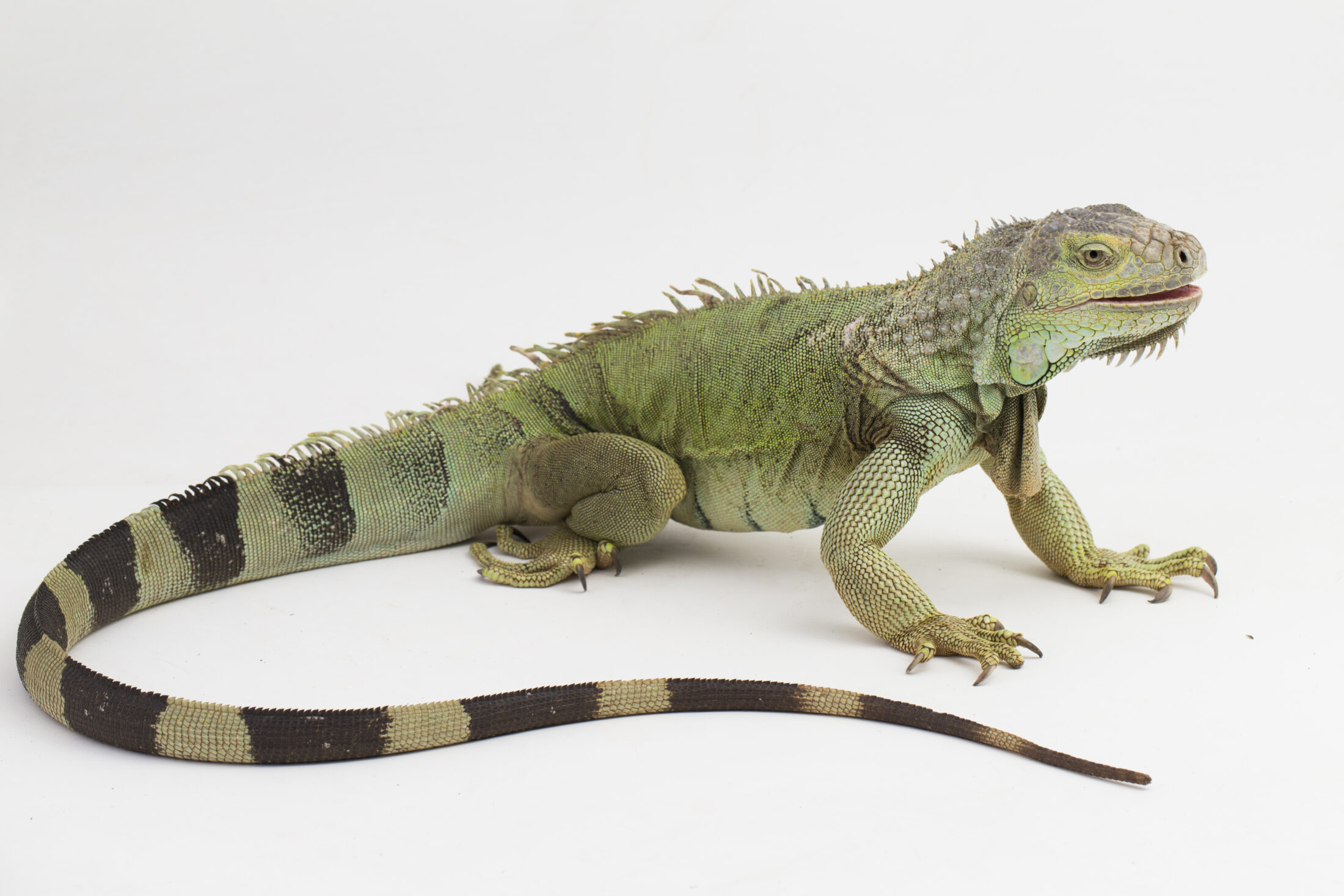
Native Location: North and Central America
Mostly herbivorous – Insects, leaves, and berries.
- Green iguanas, or common iguanas, are among the largest lizards in the Americas.
- They spend most of their lives in the tree canopies, descending only to lay eggs or change trees.
- Iguanas’ stout build gives them a clumsy look, but they are fast and agile on land.
- They have strong jaws with razor-sharp teeth and sharp tails.
Green keel-bellied lizard | Gastropholis prasina
Information coming soon
Sudan plated lizard | Gerrhosaurus major
Information coming soon
Ocellated lizard | Timon lepidus
Information coming soon
Red ackie monitor | Varanus acanthurus acanthurus
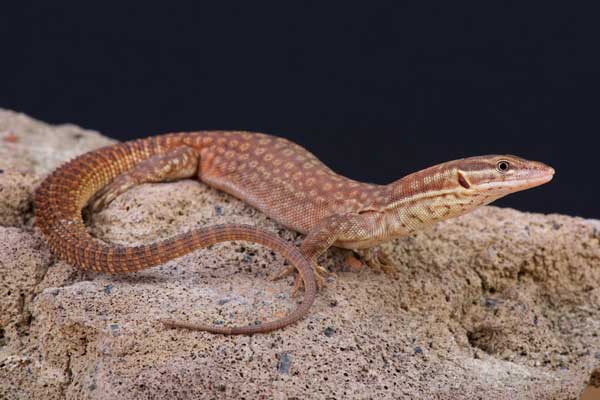
Native Location: Australia
Carnivore – arthropods, insects, small lizards, mammals, eggs, and marsupial joeys.
- Also known as spiny-tailed monitors, these lizards use their spiny tails to defend themselves against predators. They wedge themselves into a tight space and block the entrance with their tail.
- Monitor lizards are among the most complex and intelligent reptiles.
- This spiny-tailed monitor subspecies has the longest tail and legs of all subspecies.
- In the wild, approximately 70% of its water requirements come from its food.
California Mountain Kingsnake | Lampropeltis zonata
Information coming soon
Eastern corn snake | Pantherophis guttatus
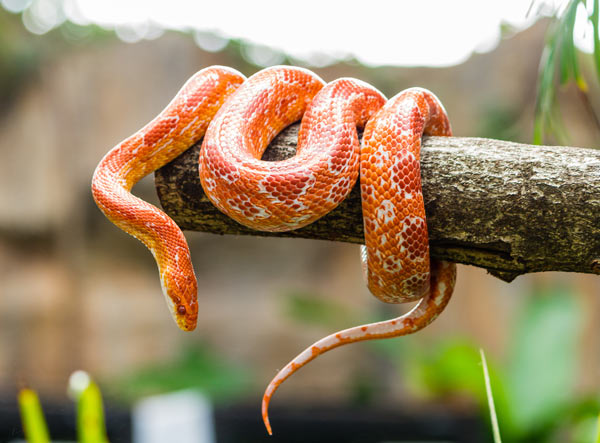
Native Location: North America
Carnivore – eats small mammals, birds, lizards, and amphibians
- The corn snake is beneficial to humans because it helps to control populations of wild rodent pests that damage crops and spread disease.
- Though superficially resembling the venomous copperhead (Agkistrodon contortrix) and often killed as a result of this mistaken identity, the corn snake lacks functional venom and is harmless.
- The corn snake can be distinguished from other rat snakes and from kingsnakes by the stripe extending from the back of its eye past the corner of its jaw, plus the large, bold black and white checkerboard pattern on its belly.
- They are “solar-powered” and rely fully on external heat or light sources.
- They smell with their tongues.
Red Tegu | Tupinambis rufescens
Information coming soon
Ouachita Map Turtle | Graptemys ouachitensis
Information coming soon
Mexican Musk Turtle | Staurotypus triporcatus
Information coming soon
Common Musk Turtle | Sternotherus odoratus
Information coming soon
Birds (Only At Maplewood)
Leghorn chicken | Gallus gallus domesticus
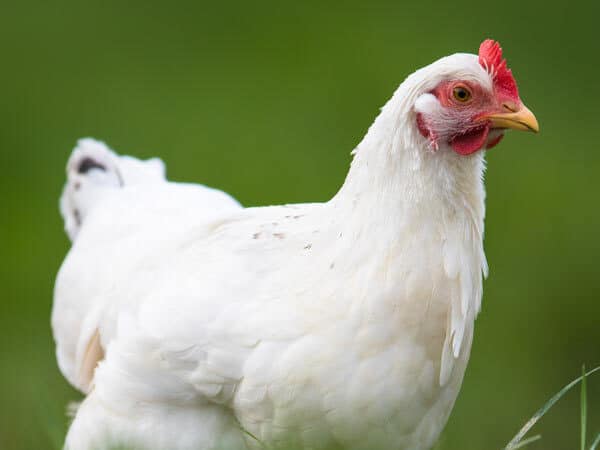
Domesticated
Omnivore – greens, seeds, insects, larvae, worms, other invertebrates, and even small animals.
- This breed originated in Tuscany, central Italy.
- Birds were first exported to North America in 1828 from the Tuscan port city of Livorno on the western coast of Italy. They were initially called “Italians”, but by 1865, the breed was known as “Leghorn.”
- The name comes from Leghorn, the traditional anglicization of Livorno, the Tuscan port from which the first birds were exported to North America.
- This breed comes in three colors: black, white, and brown (light and dark)
- Leghorns are good layers of white eggs, laying an average of 280 per year and sometimes reaching 300–320.
Orpington chicken | Gallus gallus domesticus
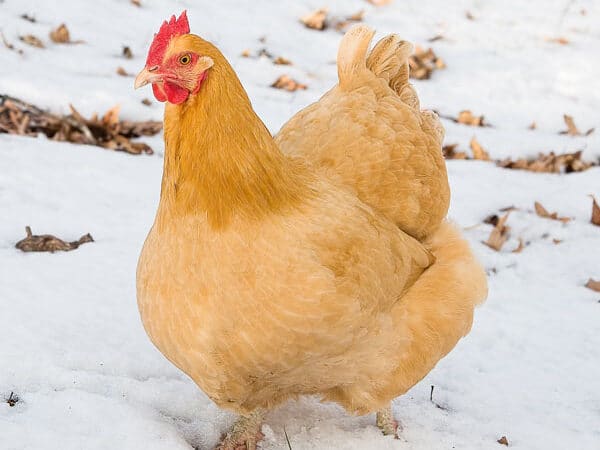
Domesticated
Omnivore – greens, seeds, insects, larvae, worms, other invertebrates, and even small animals.
- The original Black Orpington was bred by William Cook in 1886 by crossing Minorcas, Langshans, and Plymouth Rocks to create a new hybrid bird.
- These chickens are named for their original breeding location — Orpington, England.
- Colors of this breed include: Blue, Black, Buff, White (Standardised UK), Birchen, Chocolate, Cuckoo, Gold Laced, Jubilee, Lavender, Lemon Cuckoo, Partridge, Red, Spangled (Non-Standardised).
Polish chicken | Gallus gallus domesticus (with video)
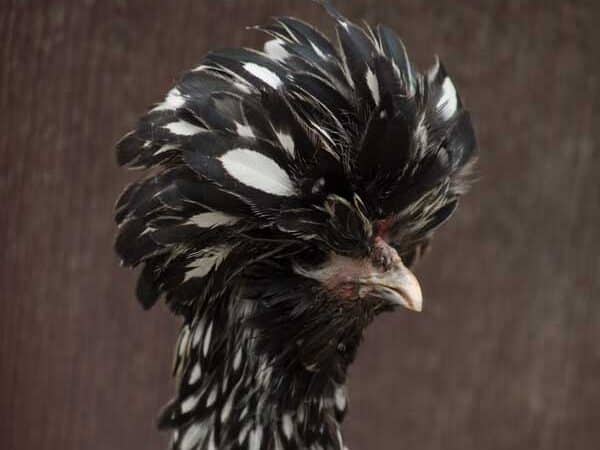
Domesticated
Omnivore – greens, seeds, insects, larvae, worms, other invertebrates, and even small animals.
- Polish chickens are bred primarily as ornamental birds and, for show-quality birds, for show, but were initially productive egg layers.
- In present times, they are rarely broody or sit on their eggs.
- The Polish has a small V-shaped comb, though the large crest of feathers often hides it. The earlobes and wattles are small and may be completely hidden by the crest.
- Polish chickens were brought to America between 1830 and 1840.
- Polish chickens lay white eggs.
Ancona Duck | Anas platyrhynchos domesticus
Information coming soon
Mallard Duck | Anas platyrhynchos
Information coming soon
Cape Barren Goose | Cereopsis novaehollandiae
Information coming soon
Fischer’s Lovebird | Agapornis fischeri
Information coming soon
Frequently Rotating Locations
Llama | Lama glama (Currently at Maplewood)
Information coming soon