
Animal Healthcare
Animal Healthcare at Sustainable Safari
Sustainable Safari holds all life in the highest regard and understands that the best scenario for all species is to be free in their natural habitat. However, today’s Earth will never allow a perfect balance for all species. Therefore, Sustainable Safari accepts responsibility for all of our animal ambassadors. Sustainable Safari is committed to providing each species with specialty care, diet, enrichment, handling, & housing.
On this page, you will find information about our team, healthcare practices, and answers to your frequently asked questions.
You will also find quotes directly from the owner, Safari Bob!
Healthcare FAQ
What does an animal observation entail?
Our healthcare team physically checks the entire animal list every day. They use our ANIMAL CARE SOFTWARE templates to guide them through all the tasks involved in this process and then document it in the software program for tracking, training, and welfare planning purposes. Our enrichment team does the same to track the animals’ reactions to the day/week/month programs they initiated for mental stimulation and activities. Our veterinarian is notified instantly, if needed, through this same system.
Things we look at daily through the templates:
- Physical Characteristics
- How the animal reacted to guests and keepers
- Any repetitive behaviors occurring, both good and bad
- Food intake and output
- Reactions to different enrichments given
- Medical needs and progress
- Enclosure maintenance
- Enclosure Cleaning needs
- Many other things can be noted and observed through the software templates.
Do the animals live at the Safari?
Sustainable Safari has several different locations that house our animals. Two are located inside Maplewood and Burnsville Malls and are open to the public, and the others are outside farms where the public is not granted access, but all the licensed inspectors are. These outside farms are where specific animals are rotated to allow for outside time with running space. See our health care section on the rotation process.
Where do the animals come from?
Every animal has a different story of how we obtained it for our collection. They will fall into a few categories, though. Rescues, Surrenders, Trades, and Purchases. Rescues still happen today when someone should not be allowed to house animals, and legal authorities take them away. Many animals are part of this process. Surrenders happen when the current owner’s life has changed in some way, and they no longer feel the animals’ interests are being met, so they seek a new home for them; if we can provide that new home with the best possible care, we will help them out and adopt and care for the animal. On several occasions, we were not the best fit and helped the owner find the solution they needed. Trades happen when we have certain animals that we bred and other facilities are seeking. Over the years, we have traded species with other USDA facilities or swapped species they were seeking for ones we were seeking. We also purchase regularly from other licensed facilities; as a license holder, we cannot purchase animals from anywhere else unless that facility has a USDA license. Note: Several years ago, we purchased some Tenrecs from an unlicensed company and received a USDA noncompliance tag. The situation was that this individual was licensed for years, did not inform me he had dropped the license, and I did not check before the purchase. I now check the status of anyone I have a planned transaction with before the deal happens.
When is it time to retire animals?
We are predominantly an indoor petting zoo facility; several animals we have had over the years are large species and can not be housed with us past the juvenile stage. Examples include camels, zdonk, antelope, deer, and zebu. We raise these as babies and then partner with other zoos to rehome them once they reach a certain size or need. Some species just don’t do well in our facility, and we identify that through our health care teams and find a forever home early.
The animals must be drugged; there is no way they are this calm!
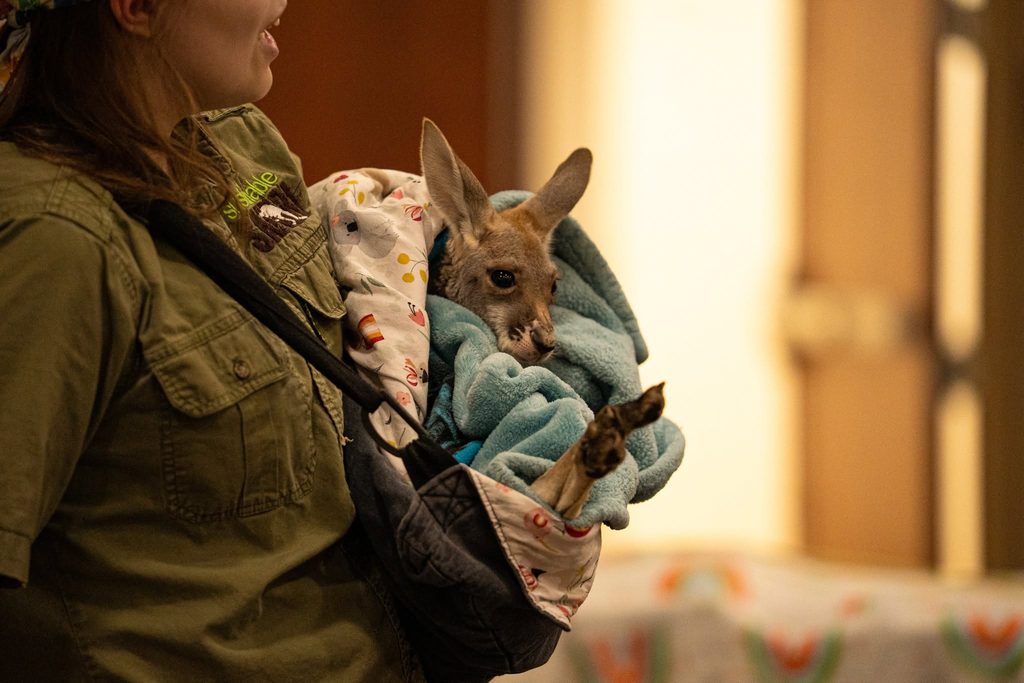
We get accused of this more often than you think. No, we do not drug any animal so you can get close to it and feed it. I think that is illegal! We raise pretty much all the animals by hand that you are allowed to make any contact with at our facility. Every kangaroo here has been raised by my animal welfare team or me. I believe that complaint of drugging comes from the Kangaroo pen itself. Kangaroos are nocturnal and will sometimes sleep almost 20 hours a day, and they do not fully close their eyes, so it can look like they are drugged. With hundreds of thousands of guests visiting us over the years, our animals have no fear or aggression toward people. We have raised many animals for other zoos over the years, and owners regularly tell us their animal is the calmest and tamest they have ever had to handle because of our handling/training skills.
Poop Patrol
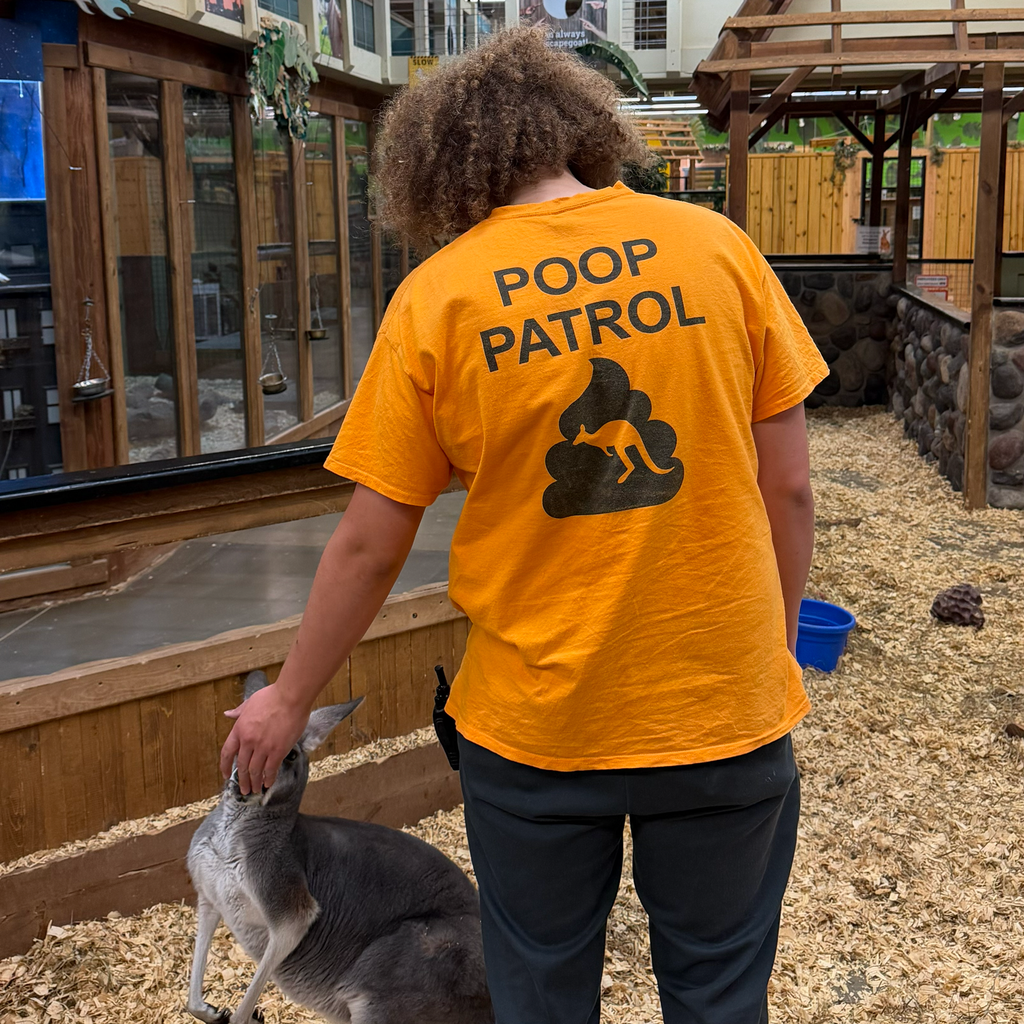
It all starts with poop!
It all starts here “literally.” Our entire staff starts at the POOP PATROL position and never leaves it. Our facility only works when we are clean. Yes, our staff advances in employment, but no one is exempt from cleaning. Poop is important to monitor; it tells a lot about the animal’s digestive health, diet needs, and hydration. Shape, color, and smell are important health indicators. Every morning and throughout the day, our staff watch the POOP, clean it up, and remove it from the facility to a compost facility.
The Healthcare Team
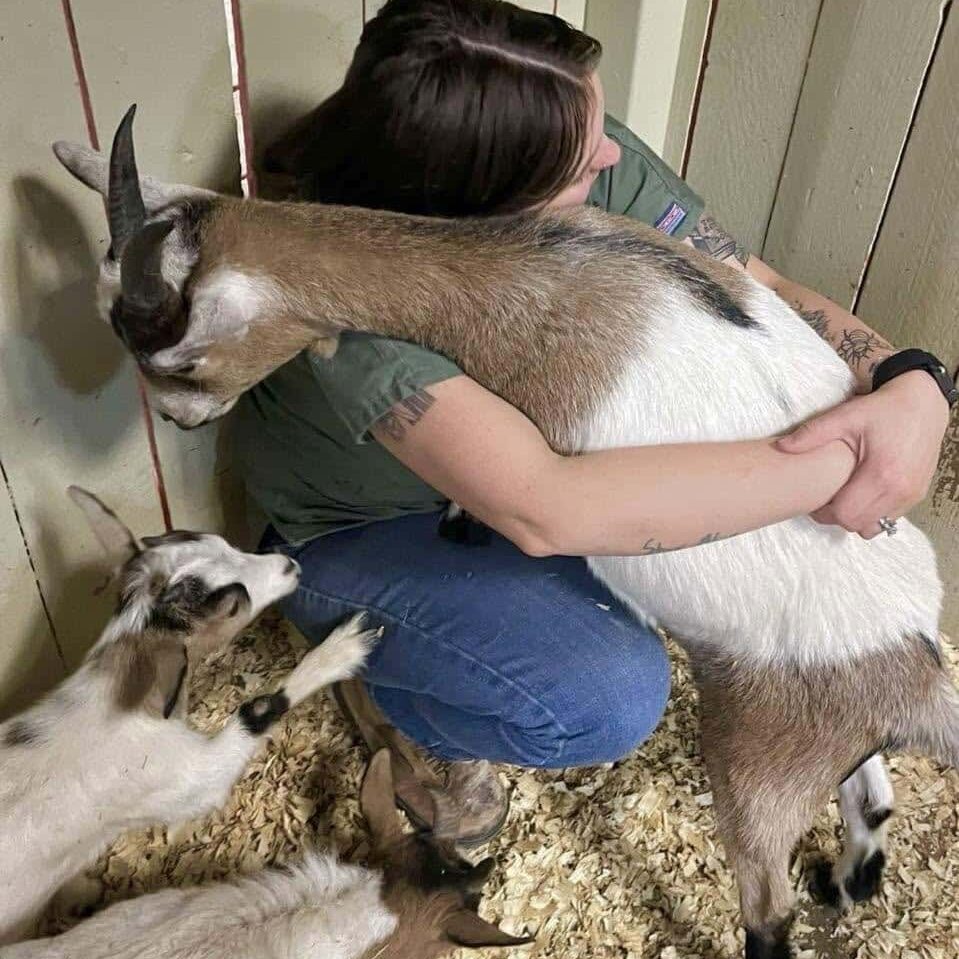
Certified Vet Techs and Animal Enrichment Team
We have several full-time Licensed Veterinary Techs, a full-time Animal Diet Tech, and full-time Reptile Care and Animal Enrichment Coordinators at each location. With our Animal Care Software, our team can track, plan, and implement our Veterinarian Care Plan, built on industry guidelines from partner AZA and ZAA Accreditation Facilities and USDA Licenses, and approved by our Veterinarian Team. Our Veterinarian is on call 24/7, and we have full access to their clinic facilities and multiple veterinarians to meet coverage needs and experience requirements.
Attending Veterinarian
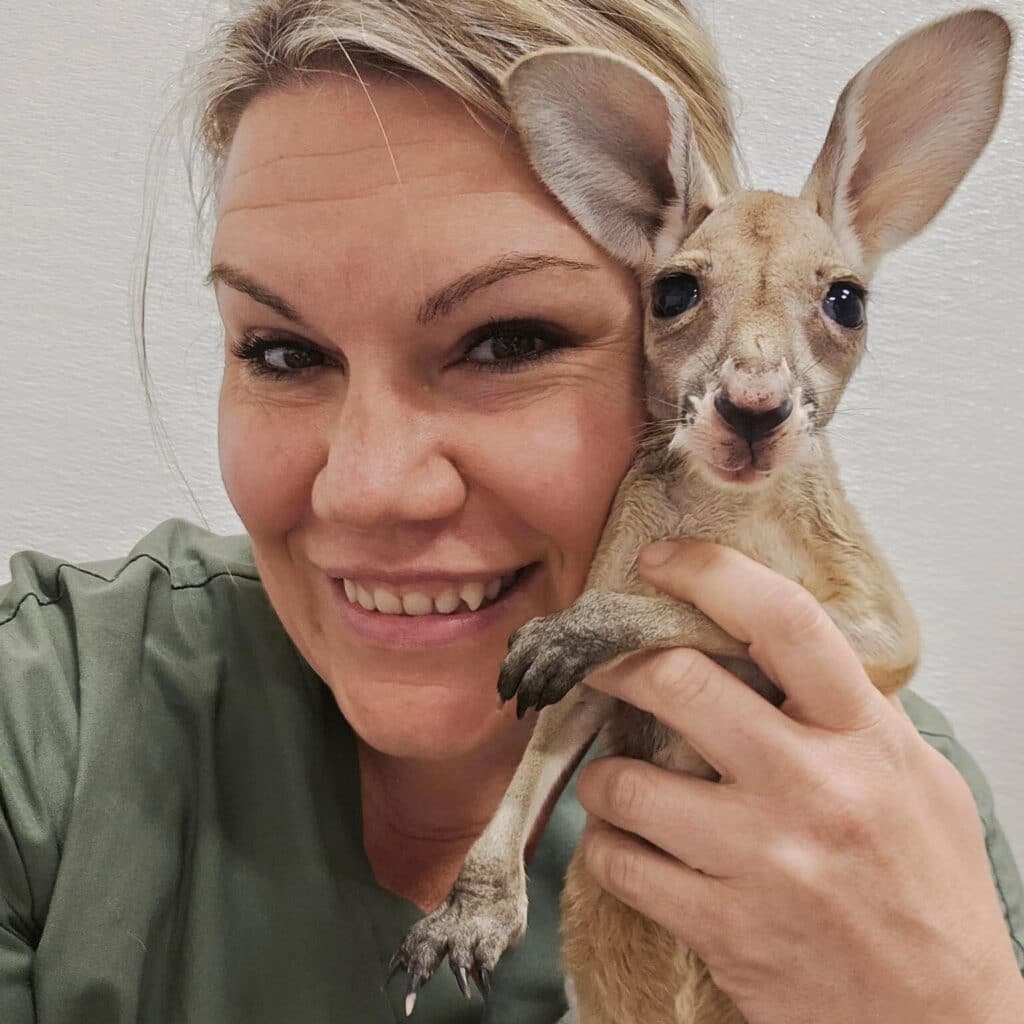
Dr. Christy Lee
Dr. Christy Lee is a native Minnesotan with more than 20 years of veterinary experience and a passion for caring for animals of all kinds. Her journey to veterinary medicine began at St. Olaf College, where she combined pre-veterinary studies with a music degree. She then traveled to St. Kitts to earn her Doctor of Veterinary Medicine degree from Ross University School of Veterinary Medicine.
Following veterinary school, Dr. Lee completed a veterinary internship in wildlife rehabilitation at the Center for the Rehabilitation of Wildlife on Sanibel Island, Florida.
Throughout her career, Dr. Lee has had the privilege of working with an incredible variety of species, including companion animals, pocket pets, birds, reptiles, hobby farm animals, zoo animals, and wildlife. She thrives on the variety and believes that every animal—and every day—brings a new adventure.
Her experiences have also taken her beyond traditional veterinary practice. She has participated in a veterinary mission trip to Tanzania, working alongside local communities and caring for farm animals. In Mazunte, Mexico, she volunteers her surgical skills to help sterilize pets as part of efforts supporting sea turtle conservation.
Dr. Lee especially enjoys working with all the Safari animals. At home, her zoo consists of 2 cats, a dog, and foster kittens with a local rescue. If you should require her services, stop by the safari and maybe you’ll get a sighting!
Listen to this podcast about Christy Lee and her career on Spotify:
Healthcare Facility and Vet Clinic
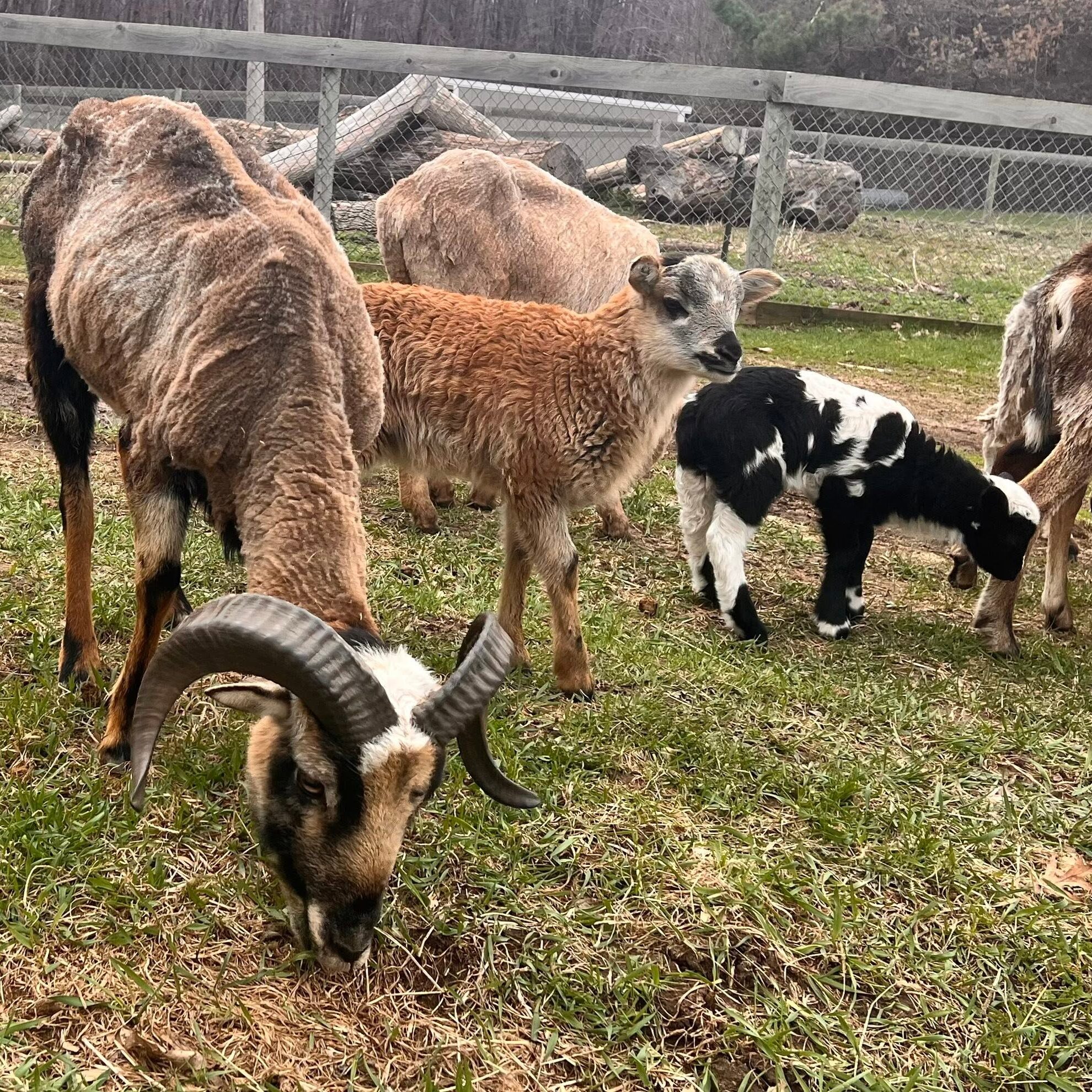
Our Burnsville location has a fully operational miniature Vet Clinic on site. It includes X-ray, blood lab, microscopes, a Surgery Suite, a Dental Table, Oxygen, several scales, deep-freezing and cooling equipment, incubators, warmers, and ventilation systems. We have quarantine and recovery rooms available when needed and a strategic partnership with a local Veterinary Technician School.
The Maplewood location does not have a fully operational clinic, but it has quarantine rooms, lab equipment, scales, and everything needed to support our facility’s normal operations.
The Barn Facility is where we move our animals to be outside the mall, in fresh air, and away from the public. Our facility is built to meet the animals’ normal needs while on location. If an emergency comes up, we have a partner veterinary facility nearby; otherwise, we transport our animals to the appropriate facility to meet their needs.
Ambassador Animals
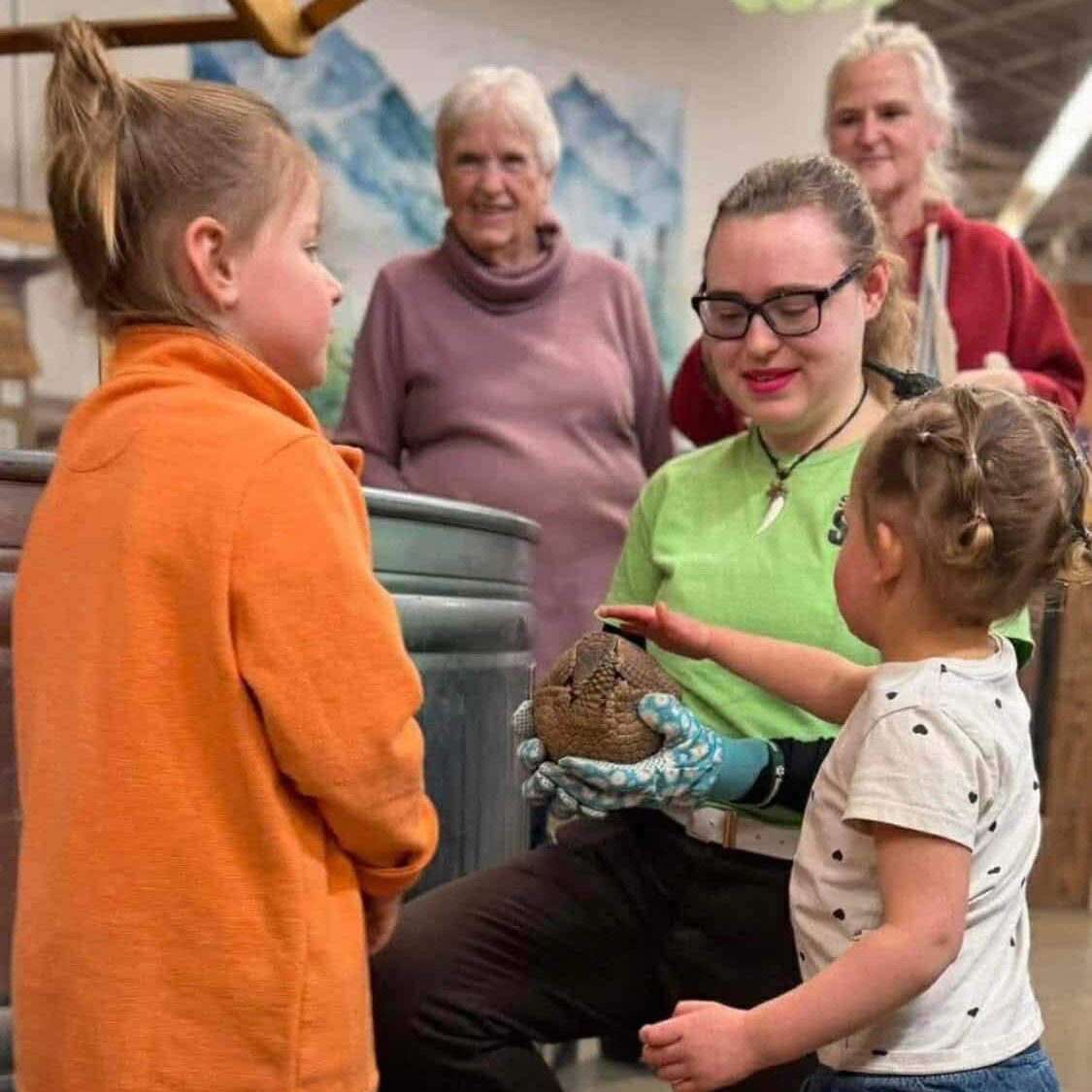
Sustainable Safari is a hands-on operation, plain and simple, with animals in educational presentations and experiences during facility opening hours or in the field at events. When done correctly, it is a powerful tool for bonding messages about animal natural history and awareness of planetary issues and patterns. Because animals’ uniqueness varies endlessly in appearance, personality, needs, etc., each animal ambassador must be carefully chosen. An Ambassador Animal is defined as “an animal whose role includes Public Holding, Feeding, Interactions and Presentations in support of education and conservation messaging.” Some animals serve as Ambassador Animals full-time, while others do so only occasionally. Ambassador Animal Accreditation (AAA) Standards apply to all our animals at all times, whether on display or off at another location. All our animals are born and raised in captivity and have never been in the “wild,” nor can they be released into the “wild.” Animals raised in captivity bond with humans, or are human-imprinted, and cannot fend for themselves like wild animals. We acquire all our animals through legal processes and from other facilities such as AZA/ZAA Zoos.
“Animal Under Veterinary Care” Signs at the Safari
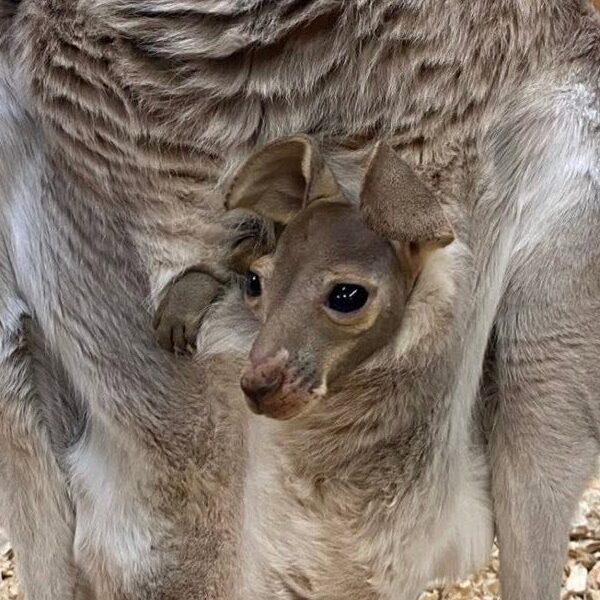
Throughout the Zoo, you will see signs like this one. They let you (our guest) know about a specific issue with the animal. It could be a scratch, patch of hair loss, feather loss, weird shed, etc. Animals, just like human kids, get boo-boos in their everyday lives, and with our exceptional staff and health care team, we catch those issues quickly and address them. These signs are meant to calm your nerves and ease any stress about mistreatment or a lack of care for our animals. We remove them once our Vet has cleared them for all treatments.
Animal Rotations (Outdoor Time)
“For the past 25 years, we have built an animal facility at our home because, like most people, I want to be around cool animals, provide for them, and experience their glory and uniqueness. Sustainable Safari was built in malls because of Minnesota’s seasonal complexities and my desire to let people enjoy them year-round. But because of weather and city codes, this couldn’t happen at my home. I believe (just like all of you) that the animals need to be outside and in fresh air as much as possible, so our home is still the base for moving the animals to the farm on rotations per our healthcare team’s plans. Of course, weather is a major factor in our decisions about moving them around. Kangaroos do not like the cold, but sheep and camels do, so our plans are built around animals’ needs. We don’t rotate every animal regularly because a scary environment can harm their health, including weather, predators, bugs, heat/cold, airplanes, fireworks, parasites, etc. Example: a single feral cat can wipe out a kangaroo mob with a single infected poop in their enclosure. Cats carry toxoplasmosis and can kill Kangaroos without much notice. We plan animal rotations with many factors to keep the animals healthy and happy.”
-Safari Bob
License Process
The inspection process for Sustainable Safari typically lasts two full days because of our several locations. When an inspector arrives, they identify themselves, and we get started immediately. We start by walking the entire property while they take notes on the animals present, enclosure conditions, cleanliness, food served, water sources, shelters, animals’ appearance, public interactions, staff availability, and everything in between. They will interview our staff about their care instructions; they will interview the food team, health team, and call the Vet (if not on site) to get a full picture of the operation. Then we go to the food prep and storage areas to inspect everything as you would in a human restaurant, then move to the vet areas and repeat the process. Once we’ve addressed all areas, we sit in the office and review each animal’s personal records, vaccination plans, and history. After everything is reviewed, the inspector publishes a report, and we talk through it and discuss any needed improvements. Keep in mind these inspections are 100% unannounced; they show up unannounced (which is good). Before we became Sustainable Safari, the zoo was called Cock-A-Doodle Zoo and didn’t have the staff numbers we do now. The owner, Bob, had a regular job, so we did have several noncompliance write-ups for not being home to meet the inspector at the Barn Facility. This isn’t an issue unless it happens on back-to-back occasions, which makes it look like you’re hiding from them.
Sustainable Safari has been licensed by the USDA and DNR for over 20 years now and hasn’t had a critical violation from either licensing body. A typical inspection write-up has three different noncompliance levels. First, what we all hope for is a perfect inspection with no noncompliances noted. Second is having one or more noncompliances written out that need attention and/or repairs. These could include needed maintenance, being unavailable for an inspection, missing paperwork, expired medications in the med inventory, etc. Noncompliances are write-ups that don’t directly affect animal welfare. Lastly is an inspection report with a critical violation. A critical violation is typically when an animal loses its life due to preventable circumstances, human neglect causing animal harm, an animal in immediate need that has not been granted to it, or an animal escape.
USDA, DNR, Board of Animal Health – Results
Notes on Noncompliances from the Sustainable Safari Owner, Safari Bob:
- Report 12/29/21 – I purchased 20 tenrecs from a former Licensee, but I did not know at the time that he had dropped his USDA license. Correction: I double-check all background licenses prior to obtaining any animals, with no assumptions.
- Report 4/3/25 – We were in Duck breeding season, and our Drakes were actively trying to populate the globe. For anyone that doesn’t know how ducks breed; The drake will climb on the back of the hen pushing them to the ground and grabbing their neck and head with their bills. They clamp down as best they can while tearing feathers from the neck, head, and body in the process. A customer complained that the ducks were being uncared for and abused when, in fact, everything was normal activity. Correction made – We separated the sexes and allowed feathers to regrow till the process starts over. On two occasions, our inspector wrote a noncompliance for the duck water pond not being sufficient size for all the animals to enter the water at the same time. The USDA produces a manual of the rules we must follow to be a license holder. The section the inspector used for this noncompliance was not written the way it was interpreted for the inspection. I filed a review of this complaint and was denied twice. I stated the rules in place for us to follow do not say all birds must be able to enter the water at the exact same time, but that all the birds must have a water source to allow for normal behaviors at their access. After multiple visits to AZA-accredited facilities and seeing that their duck-off-season ponds were exactly like ours, I filed another appeal with the USDA asking why it’s OK for AZA facilities to use such water sources but not us! This time I was granted the appeal, but they would not erase the previous noncompliances due to time lapses.
- Report 9/3/24 – Noncompliance of not having lids on our trash cans; easy fix; we now have lids. Second noncompliance – Scratched wood on the outside of the Lemur enclosure – another easy fix; we just painted it up. And the third noncompliance was inaccurate animal inventory records. We had not transferred the movements of several animals between locations when they are shifted around. The correction we made is to update all records before loading the animals to ensure we don’t forget again.
- 7/15/25 We had the second duck pond issue (see 4/3/25 report and explanation). Second issue: mice droppings were pretty heavy in a back-room kitchen area with really run-down cabinets and clutter. Correction – we were just being far more observant and diligent with pest control and cleaning, and then all the cabinets and walls have been replaced.
- 9/13/23 Had two noncompliances at our barn. First was I needed to add additional structure for housing the Ducks and Emu from weather and second was a creation of an enrichment program for all our bird species. This plan was in place, but I had not had my vet sign off on it, so in the inspector’s eyes, it did not exist.